Marvel did not need another movie that looked as if it had been assembled from familiar pieces. It needed a world with its own temperature, furniture, skyline, and sense of humor. The Fantastic Four: First Steps found that identity by stepping sideways instead of trying to move every part of the MCU forward at once.
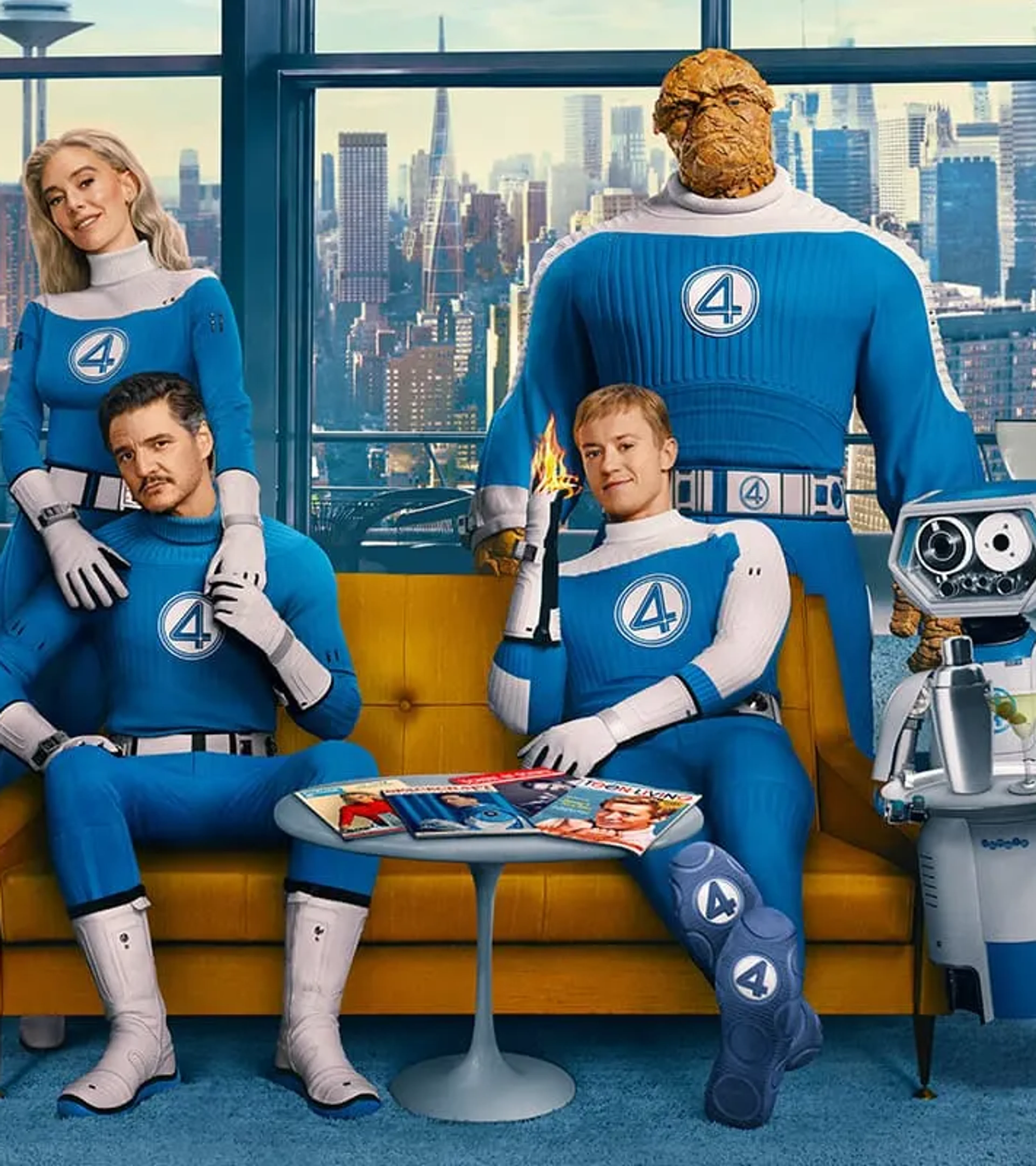
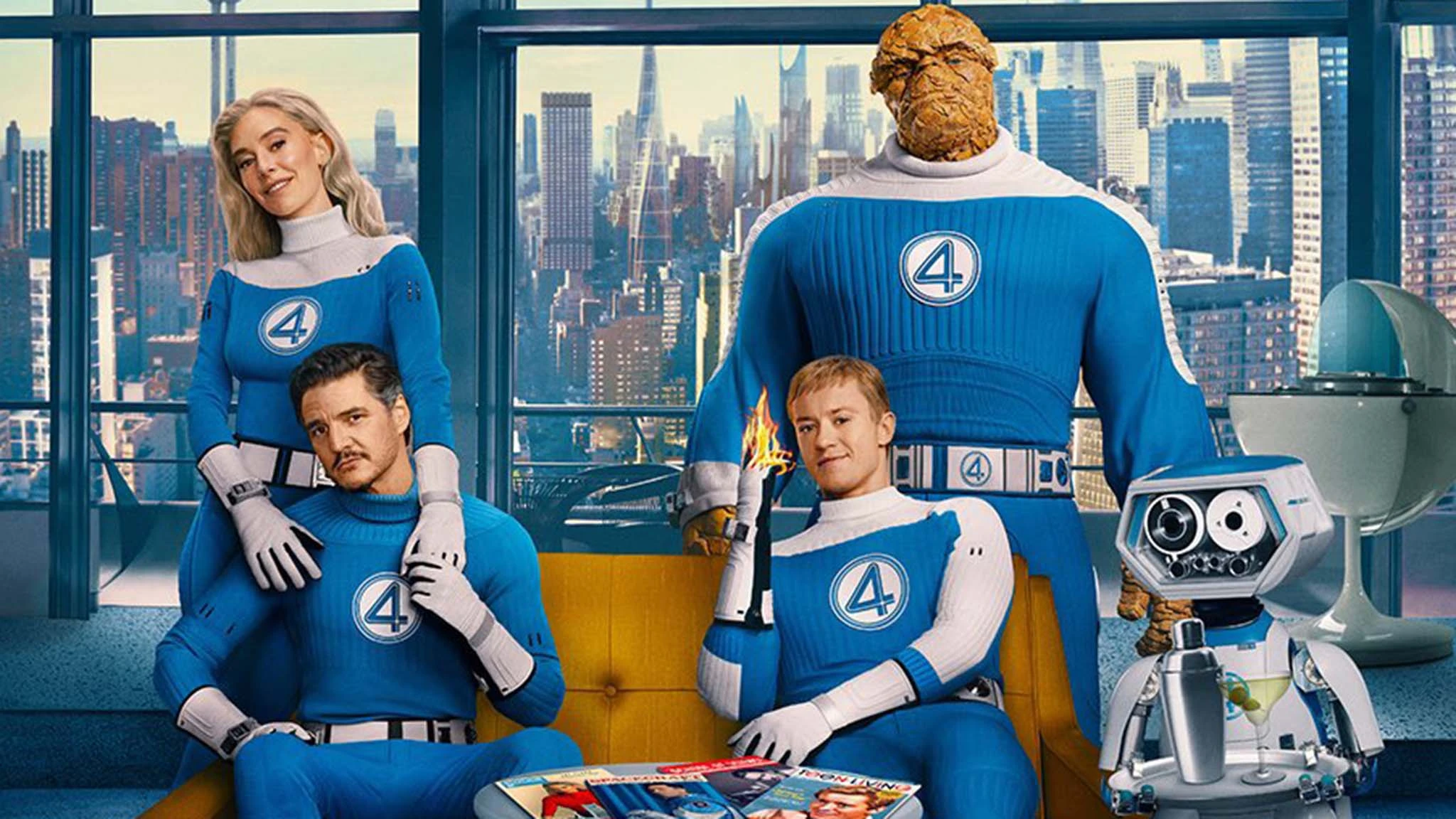
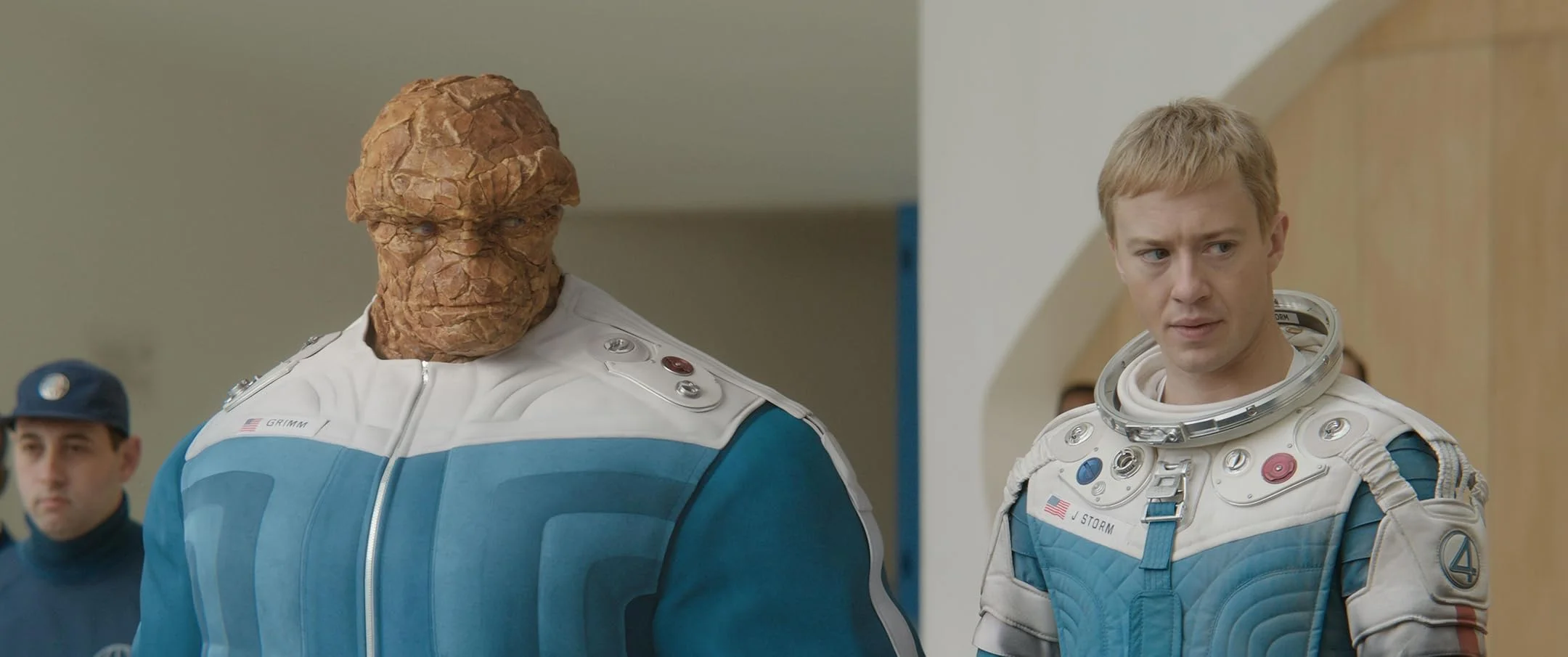
The film’s official Marvel page describes a 1960s-inspired retro-futurist setting built around Reed Richards, Sue Storm, Johnny Storm, and Ben Grimm. That is basic promotional language, but the commitment behind it changes how the movie feels. The future is not a vague layer of holograms added to a modern city. It is a complete design language, from the Baxter Building to the team’s uniforms and the rounded machines surrounding them.
That choice gives the Fantastic Four something Marvel films often struggle to protect: a private identity. Their home does not feel like a temporary room inside a shared franchise. It feels like the place these four people actually live, argue, eat, invent, and recover after saving the world.
A Marvel Movie That Does Not Look Borrowed
The easiest route would have been to place the team in the familiar MCU and let cameos provide the excitement. First Steps is stronger when it trusts architecture, color, and movement to do that work. The blue-and-white suits, warm interiors, analog controls, flying cars, and space-age city all belong to the same visual thought.
Marvel’s production-design breakdown explains that Earth-828 draws from ideas such as the 1964 World’s Fair and old “Kitchen of Tomorrow” concepts. Those references keep the movie from treating retro style as a pile of vintage props. Its world imagines how people in the 1960s might have pictured comfort, progress, and space travel arriving together.
The result feels optimistic without becoming clean or weightless. This is a future built by people who believe problems can be solved, which makes every threat to that belief more effective. Marvel’s usual gray corridors and interchangeable labs would not carry the same emotional cost.
The Baxter Building Makes the Family Believable
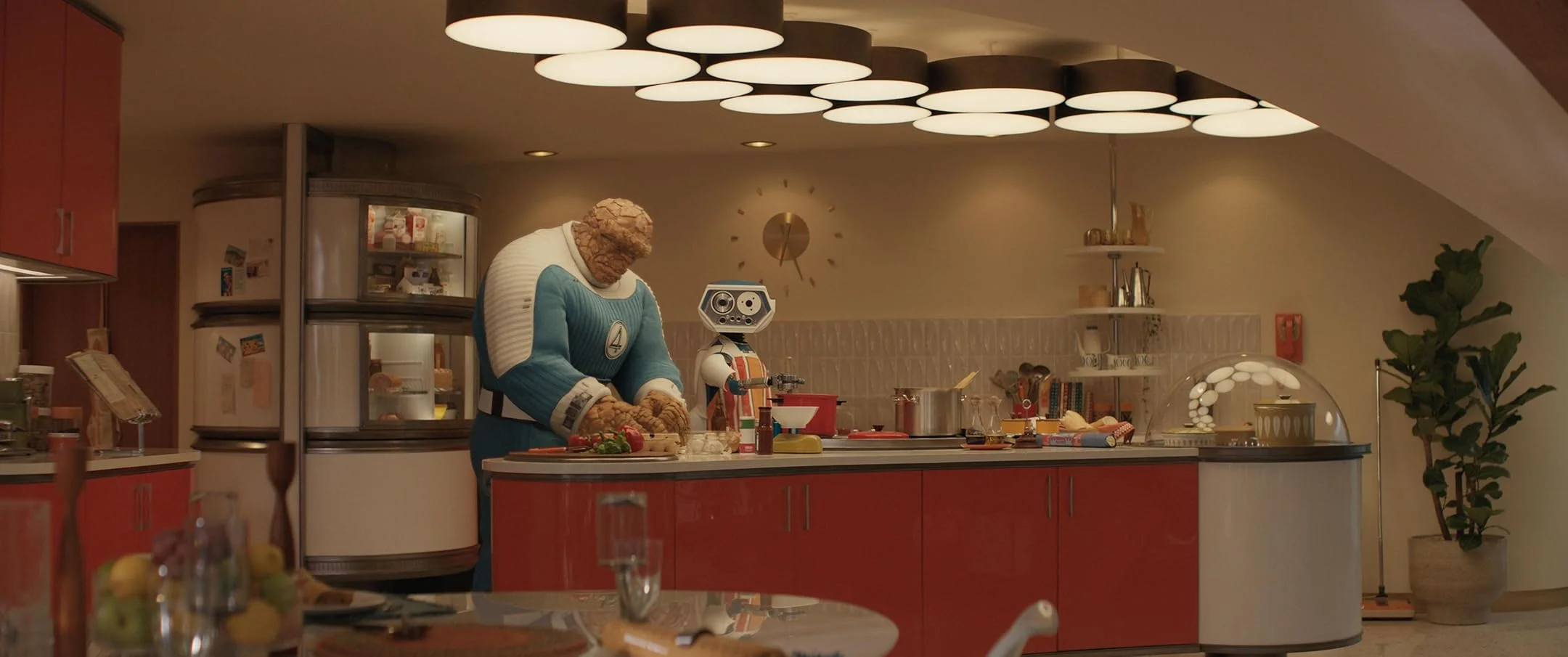
The Baxter Building works because it is both a headquarters and a home. Reed’s inventions are never far from the kitchen. H.E.R.B.I.E. can feel like advanced machinery in one shot and another member of the household in the next. Ben can stand at the counter and briefly look less like a superhero icon than a man trying to hold onto an ordinary routine.
That domestic texture gives the team chemistry somewhere to live. Reed, Sue, Johnny, and Ben do not have to announce that they are a family every time they share a scene. The room already tells us. Their lives overlap too completely for anyone to disappear when the mission ends.
Sue is especially important to that balance. A Fantastic Four story can easily become a showcase for Reed’s intelligence or Ben’s physical transformation, but the family stops working if Sue is treated as connective tissue. First Steps gives her presence real gravity, both inside the home and when the scale turns cosmic.
Advertisement

The Team Chemistry Carries More Weight Than Continuity
In Marvel’s cast interview, the actors describe a team that is already established when the story begins. Skipping the standard origin structure helps the movie. It can focus on how these people operate together instead of spending half its runtime arranging the accident that gave them powers.
Their abilities still matter, but personality supplies the rhythm. Reed tends to move toward the problem. Sue reads the people caught inside it. Johnny brings speed and confidence, while Ben grounds the room with a body that makes every extraordinary event feel physical. The movie does not need them to agree all the time. It needs every disagreement to feel as if it comes from years of knowing exactly where the others are strongest and most difficult.
That family-first structure also lowers the pressure to recognize twenty previous projects. The film can carry large stakes without turning every scene into a test of franchise memory. Viewers only need to understand the four people in front of them and what they stand to lose.
Galactus Gives the Scale a Purpose
Marvel’s behind-the-scenes material positions Galactus and the Silver Surfer as threats large enough to challenge the whole world the film has built. Galactus works here because he is not another villain fighting for control of a machine. He is hunger at an impossible scale, moving toward a city the audience has been encouraged to enjoy.
Spectacle becomes more useful when it threatens something specific. A generic skyline can be replaced in the next movie. Earth-828 cannot. Its personality turns destruction into loss rather than background noise, and the Fantastic Four’s public role makes the crisis feel like a test of everything their hopeful future promised.
The Silver Surfer adds another texture: distance, duty, and the possibility that a cosmic figure can still make a human choice. That contrast fits a movie already balancing machines with family life and giant ideas with small domestic scenes.
Standing Apart From the MCU Helped
First Steps feels freshest when it is not rushing to explain how its world connects to everything else. Marvel has trained audiences to look for doors, portals, cameos, and post-credit handoffs, but this team needs enough room to become memorable before it becomes useful to the larger franchise.
The separate setting gives the movie permission to build its own rules and visual history. More importantly, it keeps the Fantastic Four from arriving as guests in someone else’s universe. When wider connections eventually matter, the team brings a complete identity with it instead of waiting for the MCU to supply one.
Freshness Came From Commitment, Not Novelty
Nothing in First Steps is completely new. Retro futurism has decades of history, family teams are a familiar genre, and Marvel has visited alternate worlds before. The difference is commitment. The production design, character dynamics, music, technology, and cosmic scale all point in the same direction.
That coherence is what made Marvel feel new again. The movie did not reinvent superheroes; it stopped treating every Marvel hero as if they should inhabit the same visual and emotional space. The Fantastic Four finally feel at home, and that home gives the rest of the adventure a reason to matter.