Dune: Part Three Is Finally Taking Shape—and It Looks Like Paul Will Face the Consequences.
Dune: Part Three no longer feels like a movie waiting somewhere beyond the horizon.
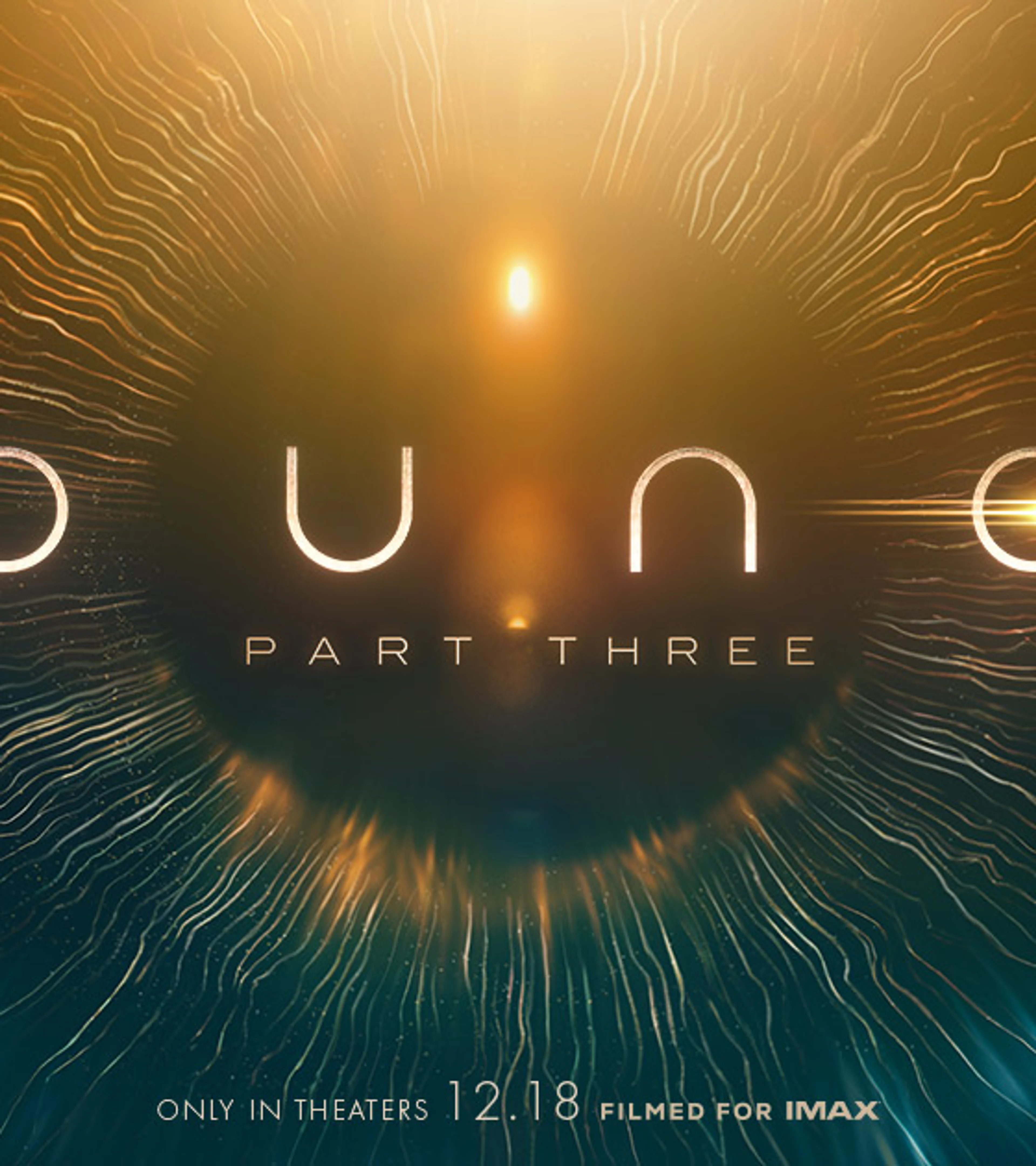
Warner Bros. and Legendary have launched the official site, released the first trailer, and set the film for December 18, exclusively in theaters. IMAX is once again at the center of the campaign, which should surprise absolutely no one. Denis Villeneuve has never treated the format as a decorative upgrade. In his Dune films, scale is part of the language.
This time, though, the scale comes with a warning.
The official site describes Dune: Part Three as the conclusion to Villeneuve’s trilogy. The film is based on Frank Herbert’s Dune Messiah, the 1969 novel that looks at Paul Atreides after the victory, after the prophecy, and after millions of people have decided he is more than a man.
Anyone expecting Paul to simply win again may be in for a shock. Messiah is not interested in making him look more heroic. It wants to know what his heroism has unleashed.
Pixel Twelve previously explored that idea in Dune: Part Three Trailer Makes Paul Atreides the Warning. Here, we are gathering what has actually been confirmed so far, from the release date and returning cast to the larger question hanging over Villeneuve’s final chapter: how do you end a trilogy built around a hero the audience was never supposed to trust completely?
When Is Dune: Part Three Coming Out?
Dune: Part Three opens in theaters on December 18.
The official marketing is already placing heavy emphasis on IMAX, following the approach that helped turn Dune: Part Two into a genuine theatrical event. There will undoubtedly be more ticketing announcements, premium-format details, and fan screenings closer to release, but the basic plan is clear: Warner Bros. and Legendary want audiences to see this on the biggest screen they can find.
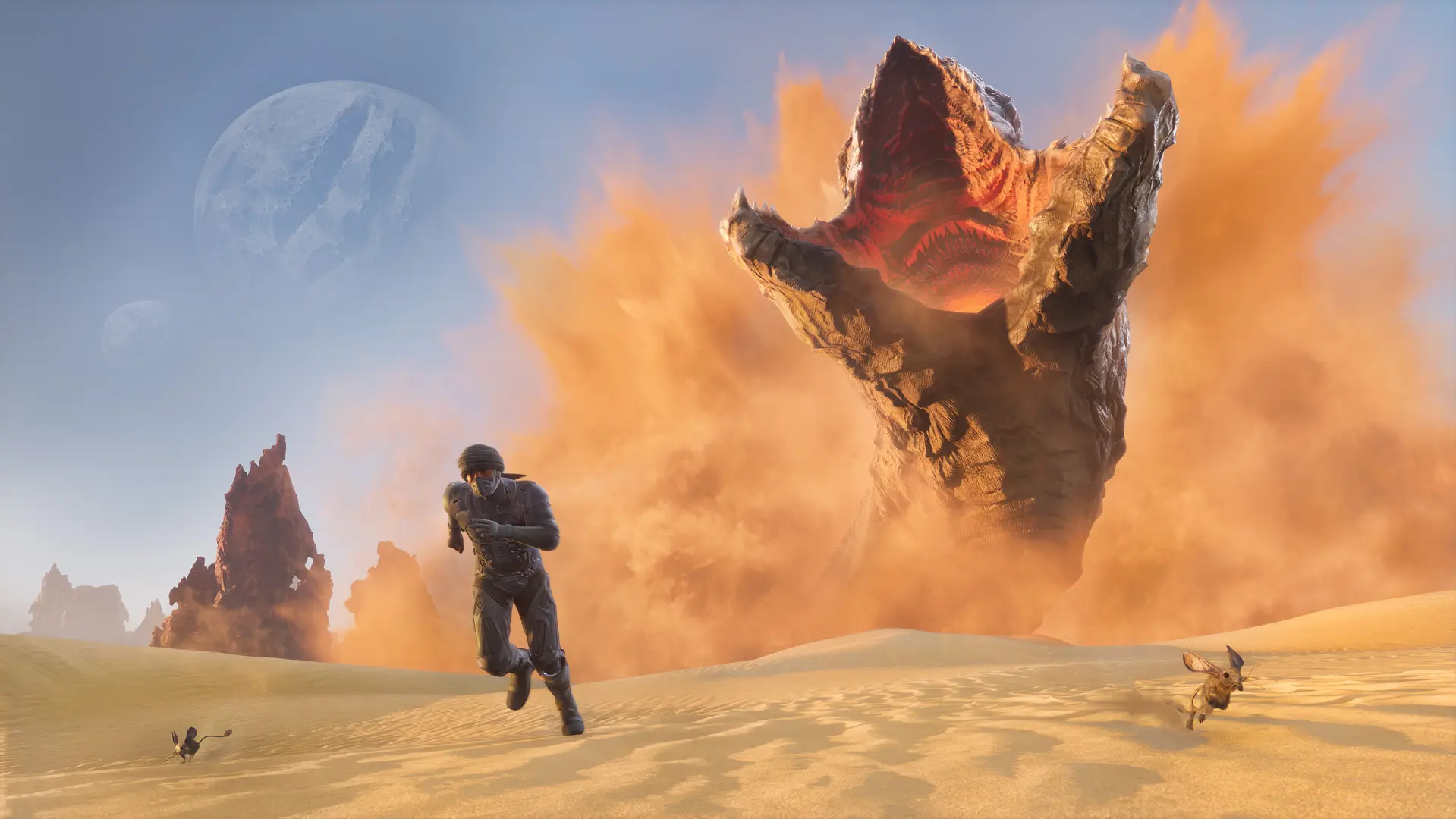
That feels especially fitting for Villeneuve. His version of Arrakis has always been overwhelming by design. The ships, sandworms, armies, and landscapes do not simply look large. They make the people standing beside them seem frighteningly small.
The Story Is Based on Dune Messiah
The third film draws from Dune Messiah, Herbert’s follow-up to the original Dune.
Paul is now Emperor, but Herbert refuses to treat that as a happy ending. His rise has created a political and religious machine that is almost impossible to control. Entire civilizations move in his name. Followers treat his visions as sacred. Enemies circle his throne, and even the people closest to him struggle to separate Paul the person from Paul the symbol.
That is what makes Messiah such a fascinating—and difficult—book to adapt. The first story gives audiences the shape of a familiar hero’s journey. Paul loses his home, finds a new people, develops extraordinary abilities, and defeats the forces responsible for his family’s destruction.
Then Herbert turns around and asks whether audiences were too eager to cheer.
The trailer appears to understand that tension. Paul is not presented as a victorious savior enjoying the rewards of conquest. He looks isolated, burdened, and trapped inside the legend that has grown around him. The war may have placed him on the throne, but it has not given him peace.
The Cast Is Enormous
The official site lists Timothée Chalamet, Zendaya, Jason Momoa, Florence Pugh, Rebecca Ferguson, Isaach de Bankolé, Charlotte Rampling, Anya Taylor-Joy, Robert Pattinson, Javier Bardem, Nakoa-Wolf Momoa, and Ida Brooke.
Chalamet returns as Paul Atreides, now carrying the weight of an empire and the consequences of the choices that created it.
Zendaya is back as Chani, whose relationship with Paul ended Dune: Part Two in a far more painful place than many book readers expected. She did not celebrate his victory. She walked away from it. That decision gives the third film an emotional wound to explore before the political conspiracy even begins.
Florence Pugh returns as Princess Irulan, Javier Bardem as Stilgar, and Anya Taylor-Joy is expected to have a much larger presence as Alia after her brief appearance in the previous film.
Robert Pattinson is the biggest new name in the cast. He has been widely connected to Scytale, a shapeshifting figure involved in the conspiracy against Paul. The official site confirms Pattinson’s involvement but does not yet offer detailed character information.
Then there is Jason Momoa.
Duncan Idaho Is Back, but It Is Complicated
Duncan Idaho died in the first Dune, sacrificing himself so Paul and Jessica could escape. His return in Part Three is not a simple reversal, and it is certainly not just a way to bring back a popular actor.
In Dune Messiah, Duncan returns through one of Herbert’s strangest ideas: a human being reconstructed from the dead, carrying familiar features and fragments of a former life, but also shaped by the people who brought him back.
That gives Momoa a much more interesting role than a conventional resurrection would offer. Paul sees the face of someone he trusted. The audience sees the same thing. Yet both are forced to wonder whether the person standing in front of them is truly Duncan, a weapon designed to manipulate Paul, or something caught between the two.
If Villeneuve gets that relationship right, Duncan’s return could become the emotional center of the film. Paul’s empire is already haunted by the people who died to create it. Now one of those ghosts is walking back into the room.
This Is the End of Villeneuve’s Trilogy
The official site calls Dune: Part Three the conclusion to Denis Villeneuve’s trilogy.
The first two films adapted Herbert’s original novel, with Dune: Part Two completing Paul’s rise among the Fremen and his seizure of the Imperial throne. Messiah gives Villeneuve the chance to finish the story somewhere more unsettling.
Advertisement

The earlier films were about the gathering of power. The third has to deal with what happens once that power becomes absolute.
That shift could make Part Three feel very different from what came before. There may still be enormous battles, sweeping desert imagery, and the kind of sound design that seems determined to rearrange the inside of your chest. But Dune Messiah is a colder and more internal story. It is filled with conspiracies, private conversations, competing visions, and people trying to move around Paul without becoming trapped in his future.
The challenge will be preserving that unease without losing the cinematic momentum audiences now associate with the franchise.
What the Trailer Tells Us
The first trailer does not feel like a celebration.
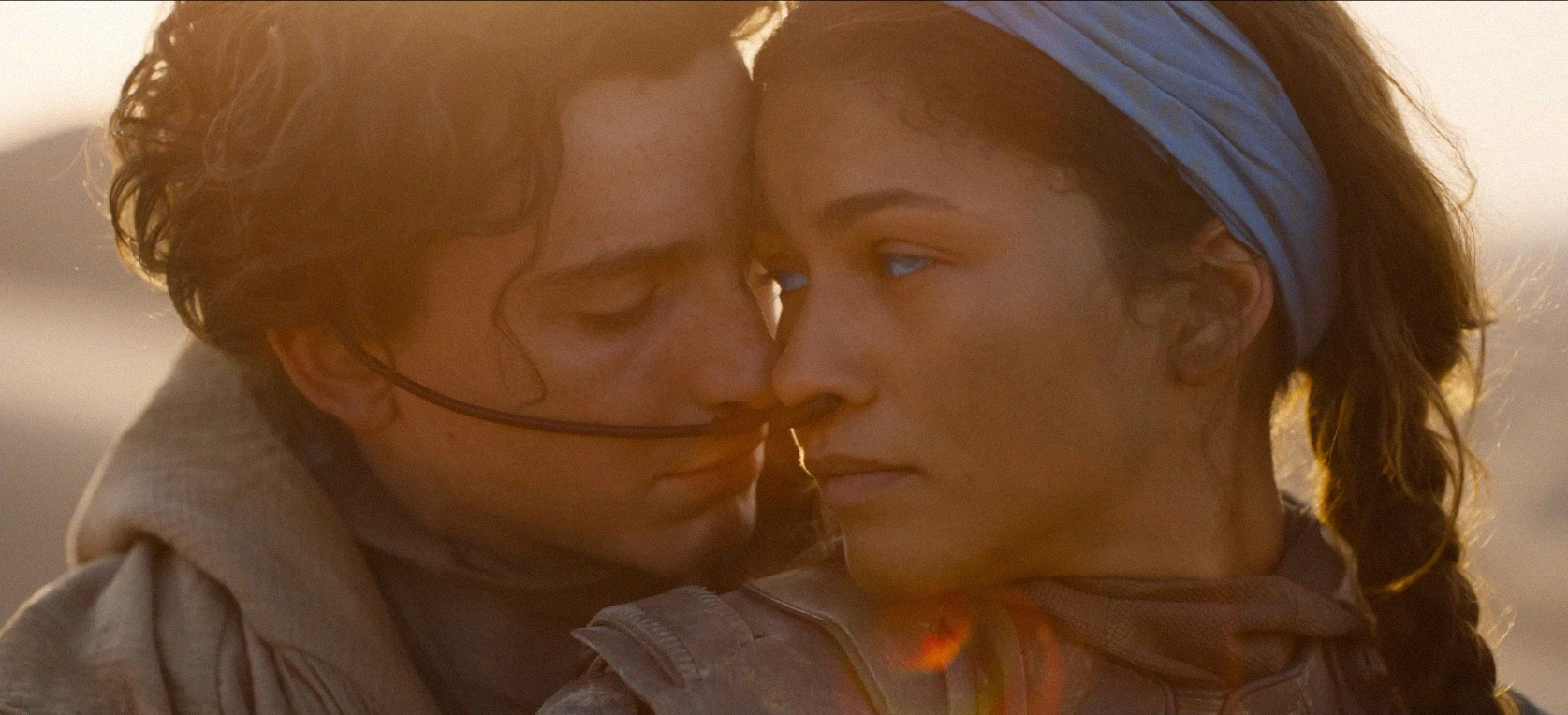
Paul and Chani are not presented as a triumphant couple finally reunited after the war. Their scenes carry distance, anger, and unfinished pain. Stilgar appears amid further violence, while the imagery suggests that Arrakis remains trapped in the movement Paul helped create.
That is the right approach.
A trailer focused only on sandworms, armies, and larger battles could have made Part Three look like an attempt to repeat the pleasures of the previous movie. Instead, the footage sells consequence. The excitement is still there, but it has been poisoned by the question of what all this victory was actually for.
The first two films built Paul into a myth. The third appears ready to pull that myth apart.
Chani May Be the Film’s Biggest Wild Card
Villeneuve has already changed Chani’s role in important ways.
In Herbert’s novel, her relationship with Paul continues despite the political arrangement surrounding his marriage to Irulan. The ending of Dune: Part Two makes that path much less straightforward. Chani leaves furious and heartbroken after Paul accepts his position as Emperor and declares that he will marry Irulan.
That was not a minor alteration. It changed the emotional starting point of the sequel.
The marketing for Part Three appears to be leaning into the divide rather than smoothing it over. That could give Chani more agency within the story and make Paul’s political choices feel personal instead of abstract. His empire does not only cost lives on distant planets. It costs him the trust of the person who once saw him before everyone else turned him into a prophet.
How the film handles that relationship may tell us more about Villeneuve’s adaptation than any sandworm or battle sequence.
What Has Not Been Confirmed
Several major questions remain.
The final runtime has not been announced. The official rating is still unknown, and the full theatrical and IMAX rollout has yet to be detailed. Some character roles have been reported elsewhere, but the studio has not published complete biographies for every member of the cast.
The biggest unknown, however, is how closely the film follows Dune Messiah.
Adaptation has never meant transcription for Villeneuve. He has condensed characters, shifted timelines, and altered relationships while trying to preserve the larger purpose of Herbert’s work. That will likely continue here.
The time jump, Alia’s role, Duncan’s return, Chani’s relationship with Paul, and the conspiracy surrounding the throne all present difficult choices. The trailer gives us a mood and a direction, but it does not tell us how Villeneuve plans to connect every piece.
Nor should it.
A film this dependent on betrayal, identity, and prophecy should keep some of its secrets.
Why the December Release Matters
A December 18 release places Dune: Part Three directly in the holiday blockbuster season, where premium screens, repeat viewings, and awards attention can all overlap.
Warner Bros. and Legendary are not treating this like a routine sequel. They are presenting it as the final chapter of one of the defining science-fiction trilogies of the decade.
That brings enormous expectations.
Dune: Part Two transformed the series from a respected adaptation into a mainstream event. The third film now has to satisfy several audiences at once: readers who want Herbert’s darker ideas preserved, viewers invested in Paul and Chani, and moviegoers who expect Villeneuve to deliver another overwhelming theatrical spectacle.
Those desires do not always point in the same direction.
The temptation will be to make everything bigger. More battles. More sandworms. More planets. More spectacle.
But Dune Messiah is powerful because it understands that bigger is not always better. Sometimes power becomes most frightening when the cheering stops and everyone has to live with what the hero has done.
The Real Question Facing Dune: Part Three
The success of Dune: Part Three will not depend on whether Villeneuve reproduces every scene from Herbert’s novel.
It will depend on whether he preserves the warning underneath it.
Paul Atreides has spent two films becoming the person everyone believed they needed. He mastered the desert, defeated the Harkonnens, brought the Emperor to his knees, and gave the Fremen a victory they had dreamed about for generations.
Now comes the harder part.
The galaxy has to survive him.
That is what makes Dune: Part Three more than another sequel. It is the chapter that determines what the first two films were really saying. Was Paul’s rise a glorious triumph, or were we watching the creation of something terrible while being too dazzled to notice?
On December 18, Villeneuve finally has to answer.