
GAME · RELEASED
Five Nights at Freddy's
A night security guard watches cameras, manages limited power, and tries to survive five shifts against roaming animatronic mascots.
Media
Game Overview
Platforms


Play modes
Made by
Created · Scott Cawthon
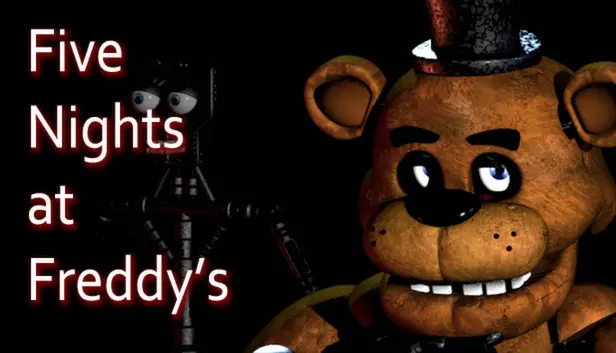
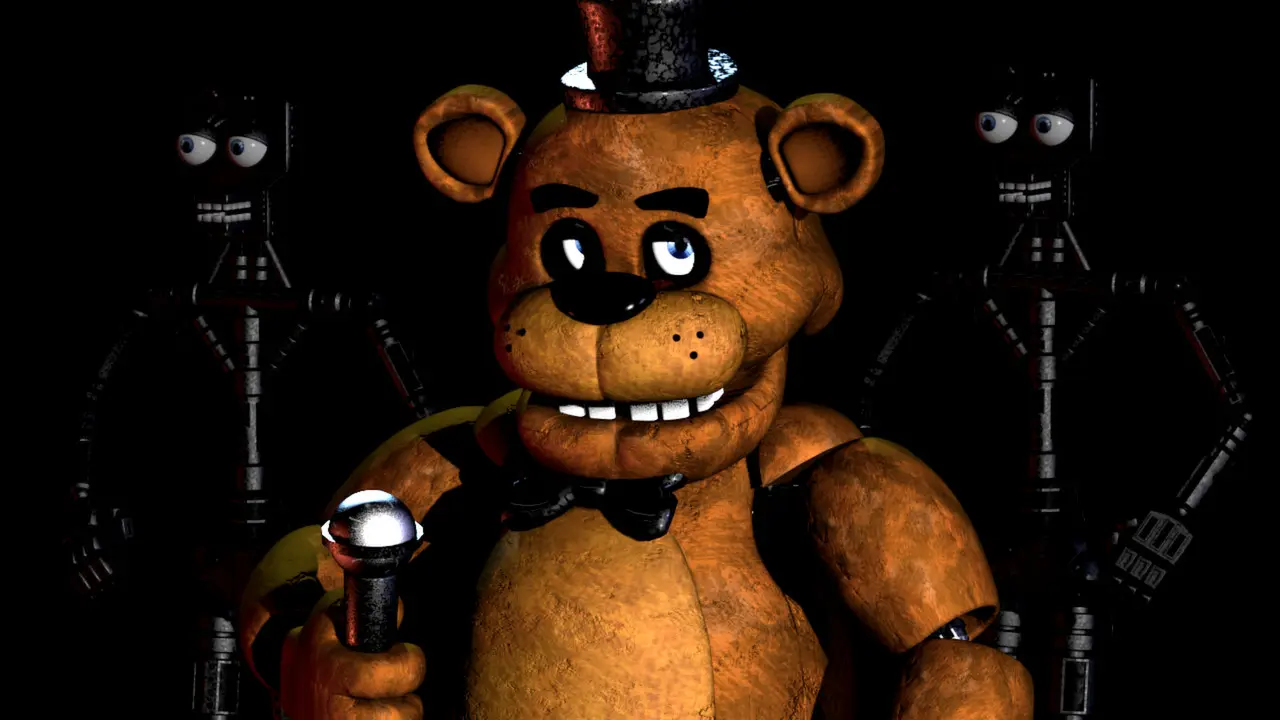
Five Nights at Freddy's is a survival-horror game created by Scott Cawthon. You play a newly hired night security guard at Freddy Fazbear's Pizza, a family restaurant where the animatronic performers begin moving after dark. The job sounds simple: make it from midnight to 6 a.m. without letting Freddy, Bonnie, Chica, or Foxy reach the office.
Read full overview
The player cannot walk around the building. Instead, the tension comes from switching between security cameras, listening for movement, checking the hall lights, and closing two office doors at the right moment. Every defensive action uses electricity. If the power runs out before the shift ends, the doors open and the office goes dark, leaving very little between the guard and Freddy.
Each night becomes more aggressive, turning a small set of controls into a careful routine of observation and risk. Checking too often wastes power; waiting too long gives the animatronics room to move. The game also hides story clues in newspaper clippings, phone calls, visual details, and rare events, encouraging players to piece together what happened at the restaurant.
First released in 2014, Five Nights at Freddy's grew from a compact PC horror game into a large franchise with sequels, spin-offs, novels, films, and live experiences. The original remains the clearest starting point because it establishes the cameras, limited power, animatronic behavior, and unsettling restaurant that shaped everything that followed.
What makes the first game work is how clearly it teaches the danger without ever making the office feel safe. A missing character on the stage, a face filling a camera feed, or a sound in the hall can change the next decision. The controls stay simple, but the pressure grows because every check costs time and power.
Community reviews
What readers think of Five Nights at Freddy's.
Loading community reviews…
Start here
A Real Freddy Fazbear's Pizza Is Opening in New Jersey in 2027
Track the nights
0 of 5 nights complete · 0%
Spoiler warning: Step names and images may reveal story events.