Despicable Me works because its central joke is warmer than it first looks. Gru begins as a supervillain with gadgets, schemes, and theatrical gloom, but the franchise finds its heart in family, especially once Margo, Edith, and Agnes turn his life into something he cannot control with a shrink ray. The villainy is decoration; the emotional hook is a strange household learning how to be one.
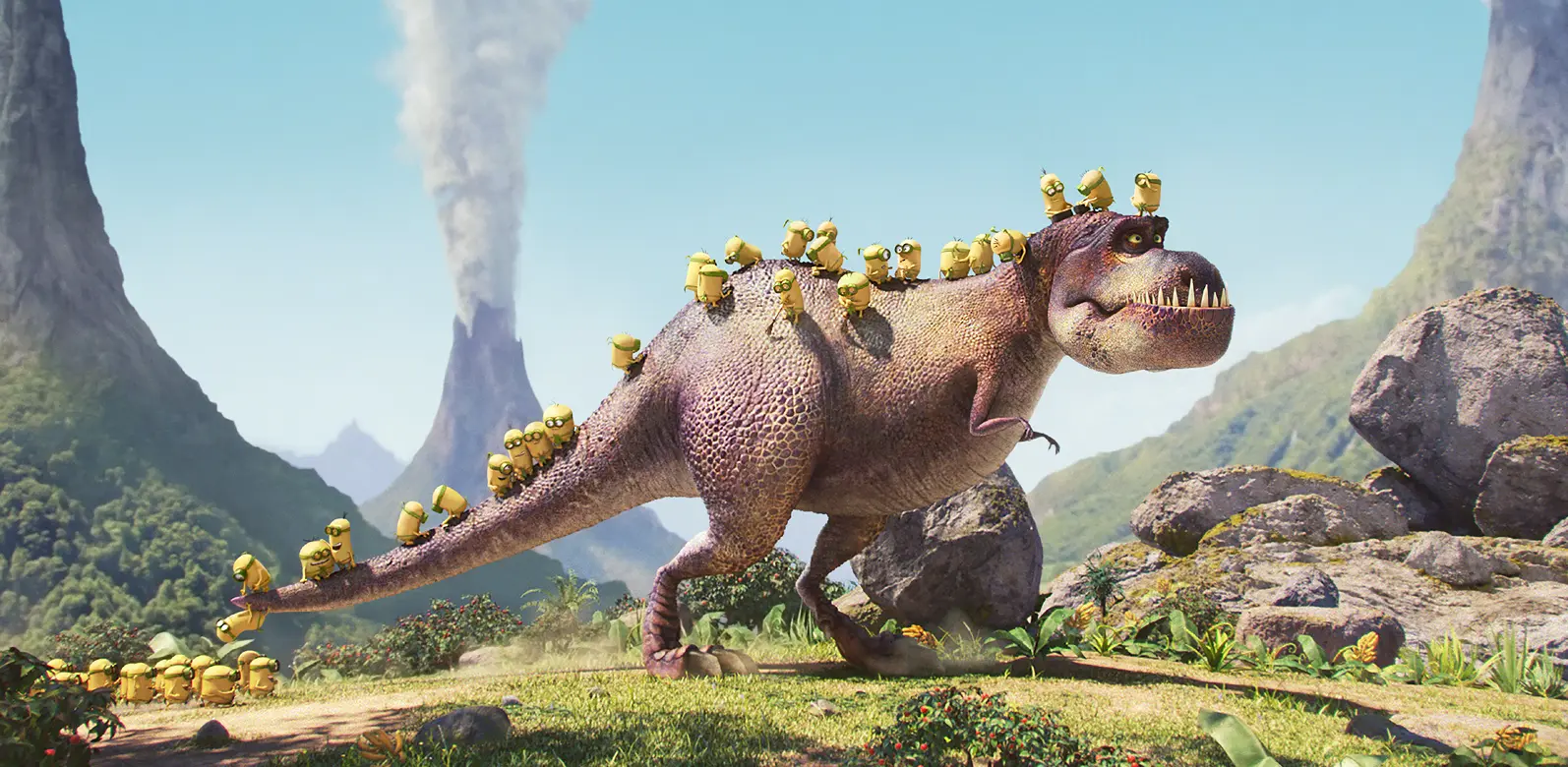
Illumination built the franchise into a broad animated comedy universe, with the Minions becoming the most visible extension. Their language, chaos, and slapstick are designed for instant recognition, which helped the series travel far beyond the original Gru story. Despicable Me, Minions, The Rise of Gru, and Minions & Monsters all sit inside the same wider comedy machine.
The franchise has two related but different appeals. Despicable Me is about Gru, family, villain parody, and redemption. Minions stories are more about silent-comedy rhythm, simple desire, visual gags, and yellow mayhem that can plug into different historical settings.
Despicable Me remains durable because it is easy to enter. A viewer does not need a deep timeline to understand the joke, but the best entries still give the chaos an emotional anchor. Gru wants to be feared, the Minions want to follow, and the family keeps pulling everyone toward something softer. The franchise is loud, bright, and silly, but its biggest laughs usually work because the characters want something very simple.