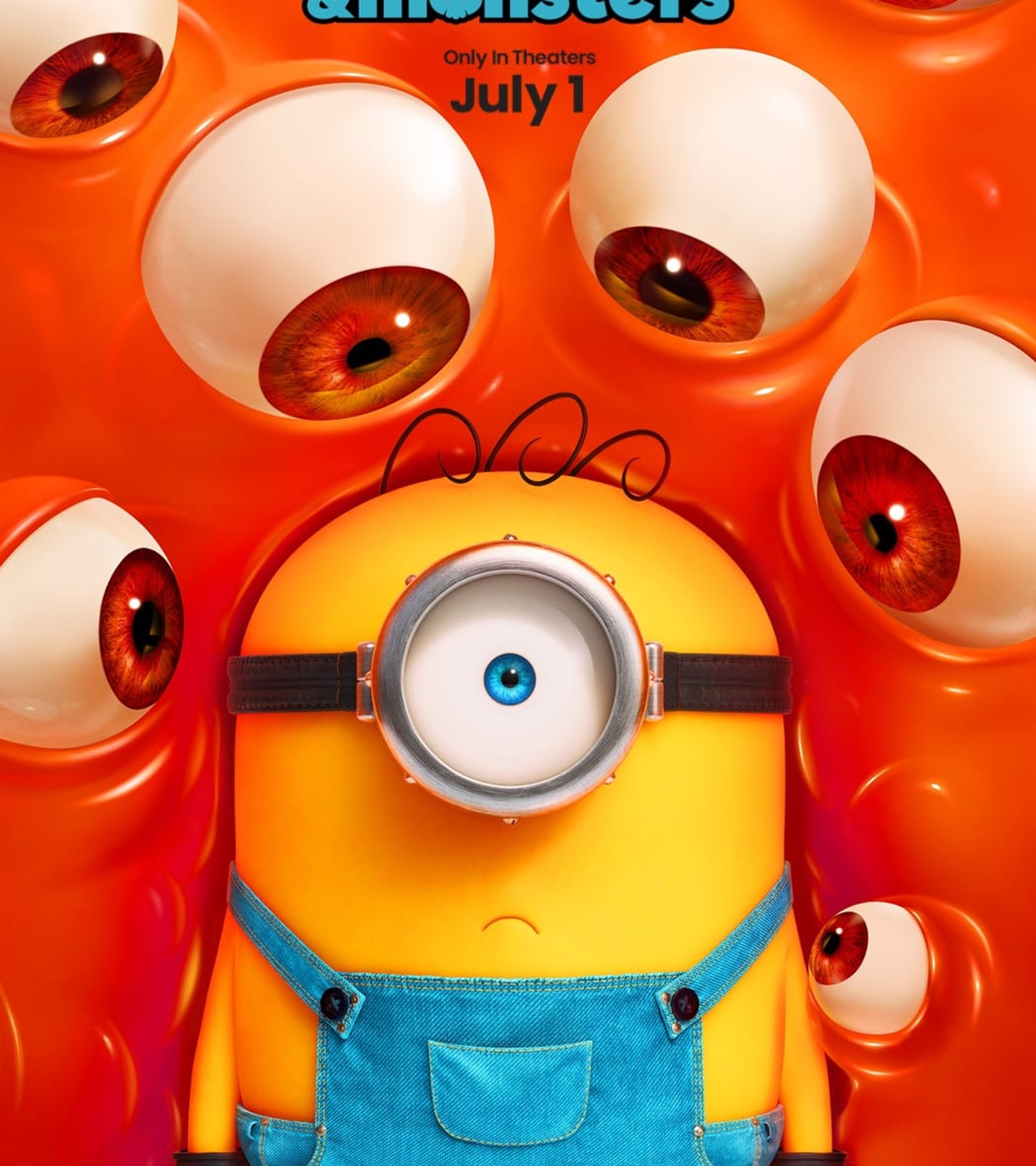
By the time a franchise reaches its seventh movie, surprise is usually the first thing to die. Despicable Me and Minions have made an empire out of bright colors, tiny agents of chaos, and a joke language that does not need translation to sell plush toys. The success is undeniable. The fatigue is understandable. A third Minions movie could have easily been another loud parade of banana jokes, licensed needle drops, and harmless destruction. Minions & Monsters is more interesting than that. It looks at the series' most overexposed gag machines and asks a useful question: what if the Minions were not just causing chaos inside a movie, but trying to make one?
That choice gives the film its best reason to exist. Set in 1920s Los Angeles, before the franchise's usual Gru orbit, Minions & Monsters follows a different cluster of Minions as they stumble into early Hollywood and accidentally become silent-era stars. James, Henry, and Ed are still Minions, so nobody is pretending this is a solemn reinvention. They break things. They misunderstand everything. They leave disaster behind them with the innocence of creatures who are always one bad idea away from a public safety hearing. But James gives the movie a new center: he is a Minion who wants to draw, observe, and eventually direct. The gag is not just that Minions are dumb. The gag is that one of them may be an artist.
That is a clever lane for Illumination because the Minions have always been closer to silent comedy than most modern animated mascots. Their language is texture. Their bodies are the joke. Their best scenes work because shape, timing, panic, and impact tell the audience what dialogue never could. By dropping them onto a studio lot where Charlie Chaplin, Buster Keaton, Harold Lloyd-style daredevil business, giant sets, fake monsters, and the panic around sound movies can all become toys, Minions & Monsters finally finds a premise that makes their limitations feel like a strength again.
The result is easily the freshest Despicable Me universe movie in years. It is not perfect. The first half, built around backlot discovery and silent-movie stardom, is cleaner and funnier than the monster-heavy second half. The film gets crowded once spell books, ancient creatures, old-Hollywood references, a supposed robot alien, and a suffragette romance all start jostling for space. Still, the movie has an energy the franchise has badly needed. It is playful about cinema history without turning into homework, silly enough for kids without treating adults like they are trapped in the theater, and fast enough that even its messier detours rarely curdle into boredom.
The Silent-Era Hook Finally Gives the Minions a Real Comic Engine
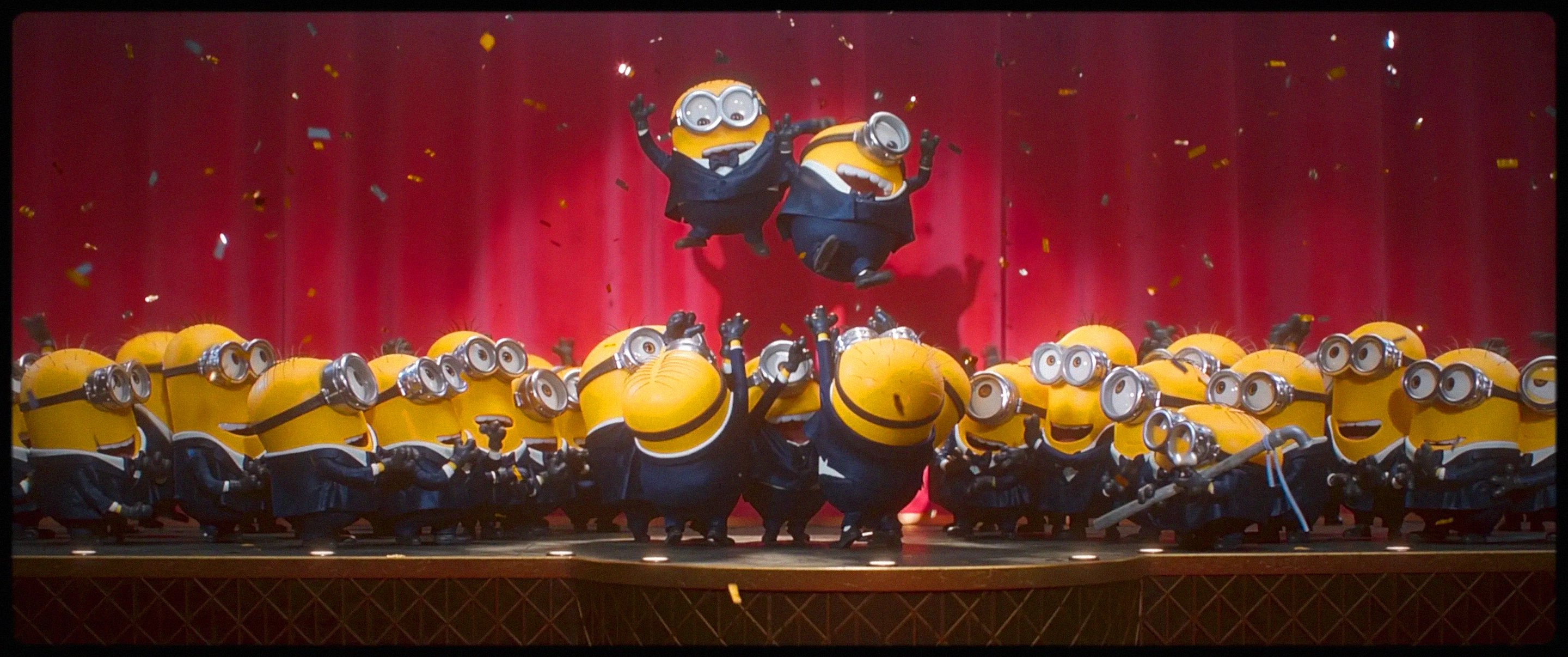
The strongest stretch of Minions & Monsters is the early Hollywood material, because the setting understands exactly what these characters are good at. A Minion does not need a witty monologue. It needs a door to swing the wrong way, a prop to misunderstand, a camera to wander into, and a director desperate enough to mistake chaos for genius. The movie gets a lot of mileage out of James and his companions turning accidents into screen magic, then watching Hollywood's machinery respond the way Hollywood always does: sell the image, print the posters, make the merchandise, and pretend the madness was a plan.
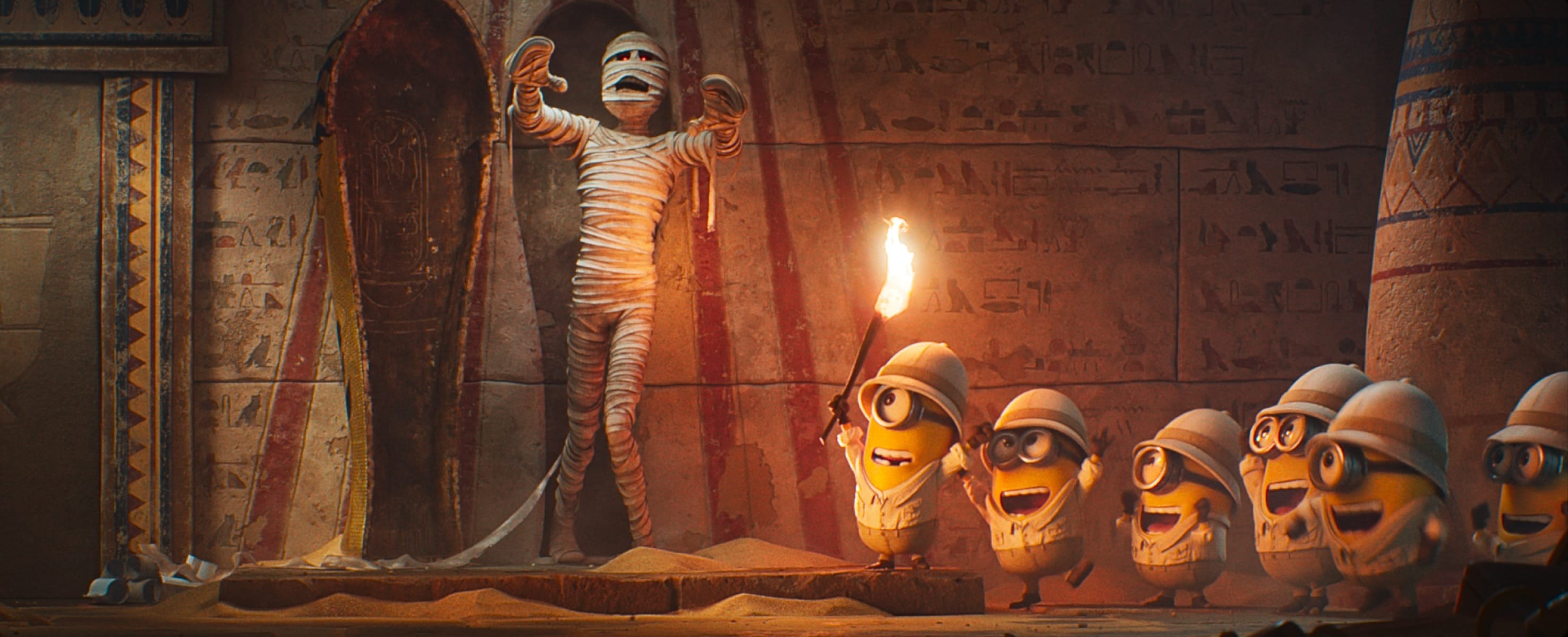
That meta joke lands because it is not only a wink at the audience. The Minions themselves are a merchandising phenomenon, and the film is funny enough to know it. When the little yellow disasters become the Next Big Thing inside the movie industry, Minions & Monsters is laughing at the franchise's own unstoppable commercial logic without becoming bitter about it. The joke is not that success is fake. The joke is that movies have always turned accidents, images, and personalities into mythology if enough people buy a ticket.
Christoph Waltz's Max is a warm fit for that material. He is not played as a villainous tyrant or a flat industry caricature. He is enthusiastic, theatrical, and just ridiculous enough to believe that the Minions' destruction might be the future of film. The character gives the first half a human rhythm that many Minions-led stories lack. Gru works in the mainline Despicable Me movies because his relationship with the girls gives the chaos emotional ballast. Max does something smaller but useful here: he gives the Minions a collaborator, an audience, and a reason to keep failing upward.
The movie is at its sharpest when it uses film history as a gag engine instead of a trivia board. The arrival of sound is a perfect example. Silent cinema is a natural home for the Minions because their gibberish plays like music until someone in a studio suddenly needs words that an audience can understand. That is the kind of franchise-specific joke that feels obvious only after the movie has done it. Of course talking pictures would threaten a Minion acting career. Of course a noir scene, a grand romantic beat, or a prestige dramatic monologue would collapse the second one of them tried to deliver actual dialogue. That is not nostalgia for nostalgia's sake. That is premise paying off.
The adult-facing references are also stronger than expected. The film's love for Chaplin, Keaton, Casablanca, Citizen Kane, Universal monster imagery, and old studio mythmaking gives older viewers something to chew on without asking kids to understand the footnotes. Children can laugh at bodies flying through props. Adults can laugh because the body flying through the prop is also a miniature history of screen comedy. The film never becomes as formally elegant as the silent comedians it nods toward, but it borrows their most durable lesson: motion is meaning.
The Monster Half Is Messier, But It Still Has Real Spark
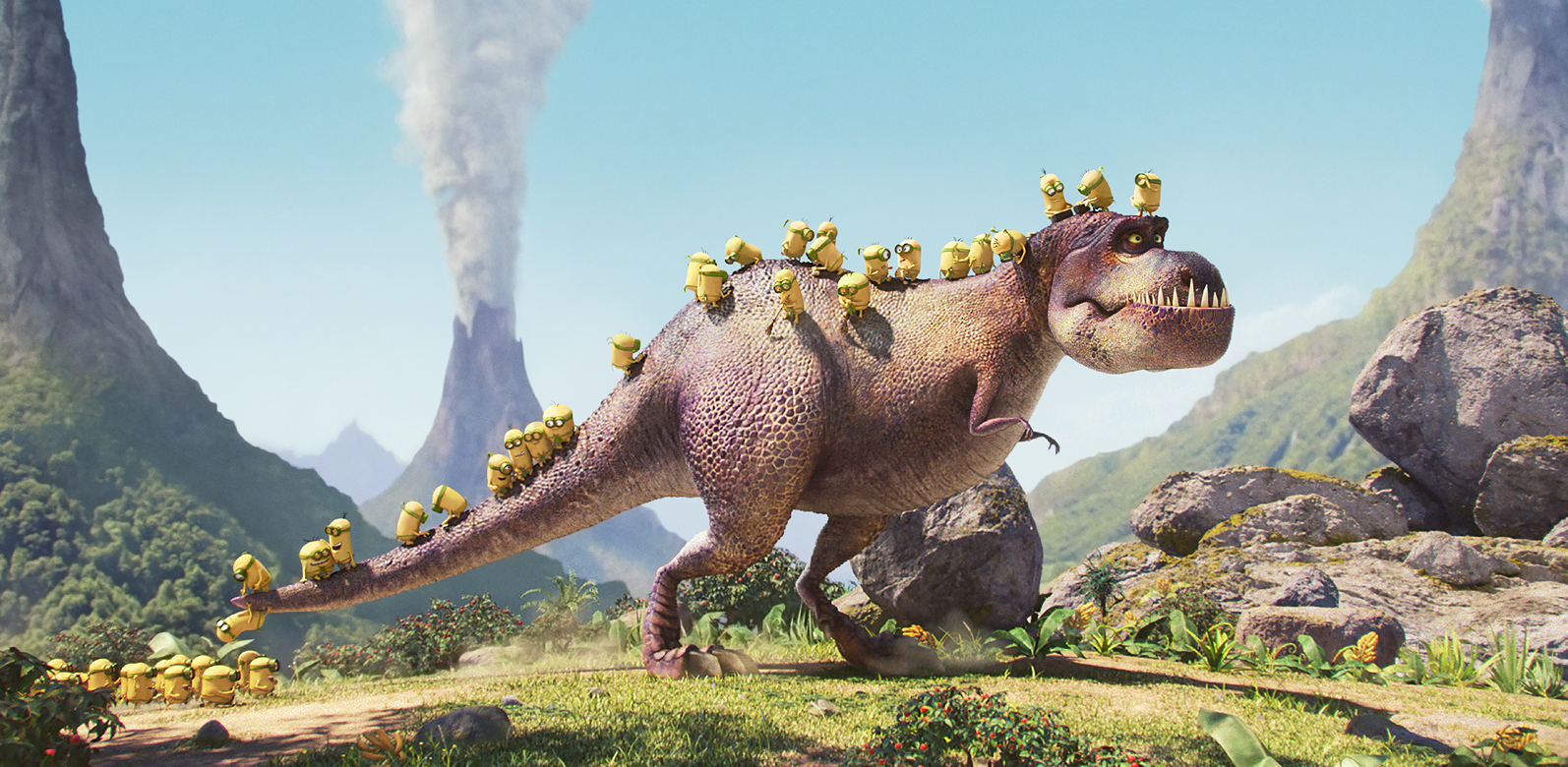
The title eventually has to make good on the Monsters part, and that is where the movie becomes less precise. Once James uses an ancient spell book to summon creatures for his own self-made movie, Minions & Monsters shifts away from the clean Hollywood satire and into a bigger, busier adventure. It is still entertaining, but the shape changes. The film starts with a beautifully simple comic problem, then adds a monster plot, a Cthulhu-flavored smooth talker named Goomi, a huge orange creature called Irene, a fake robot alien named Dort, and Debbie, an optimistic suffragette who gets pulled into the surrounding lunacy.
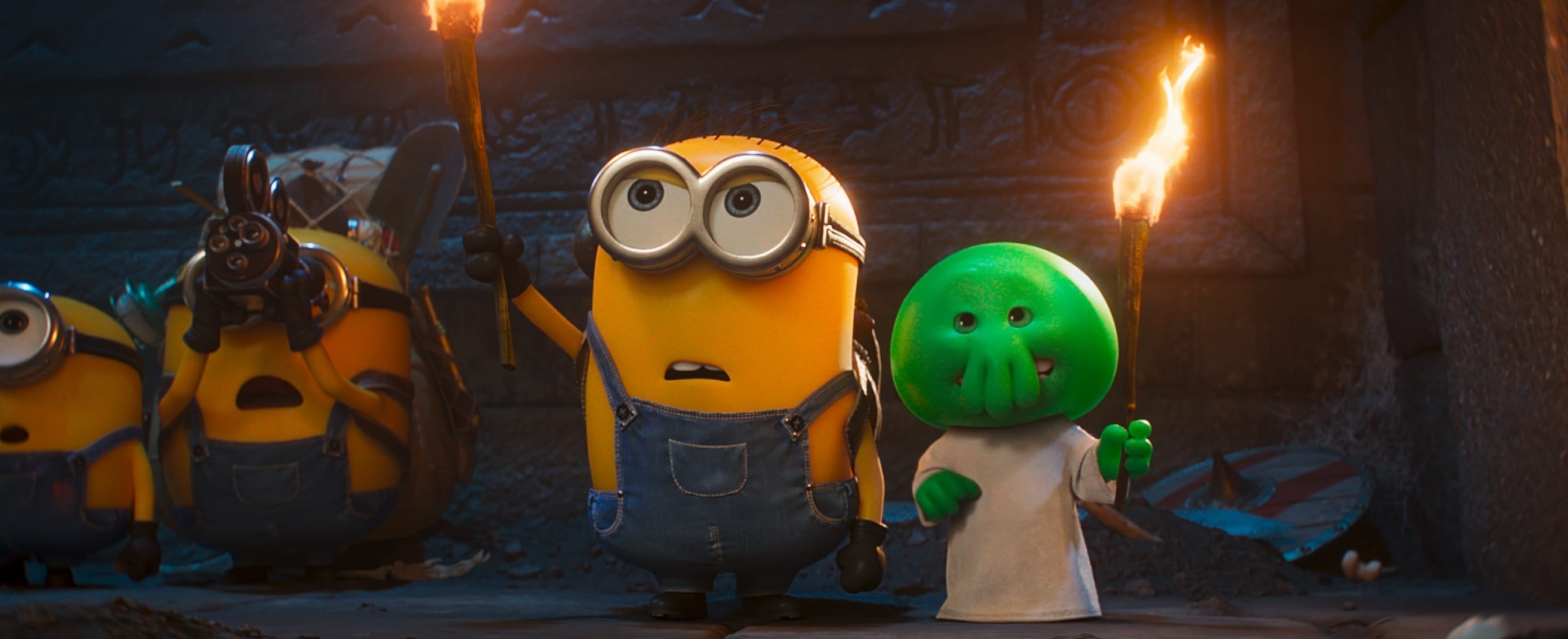
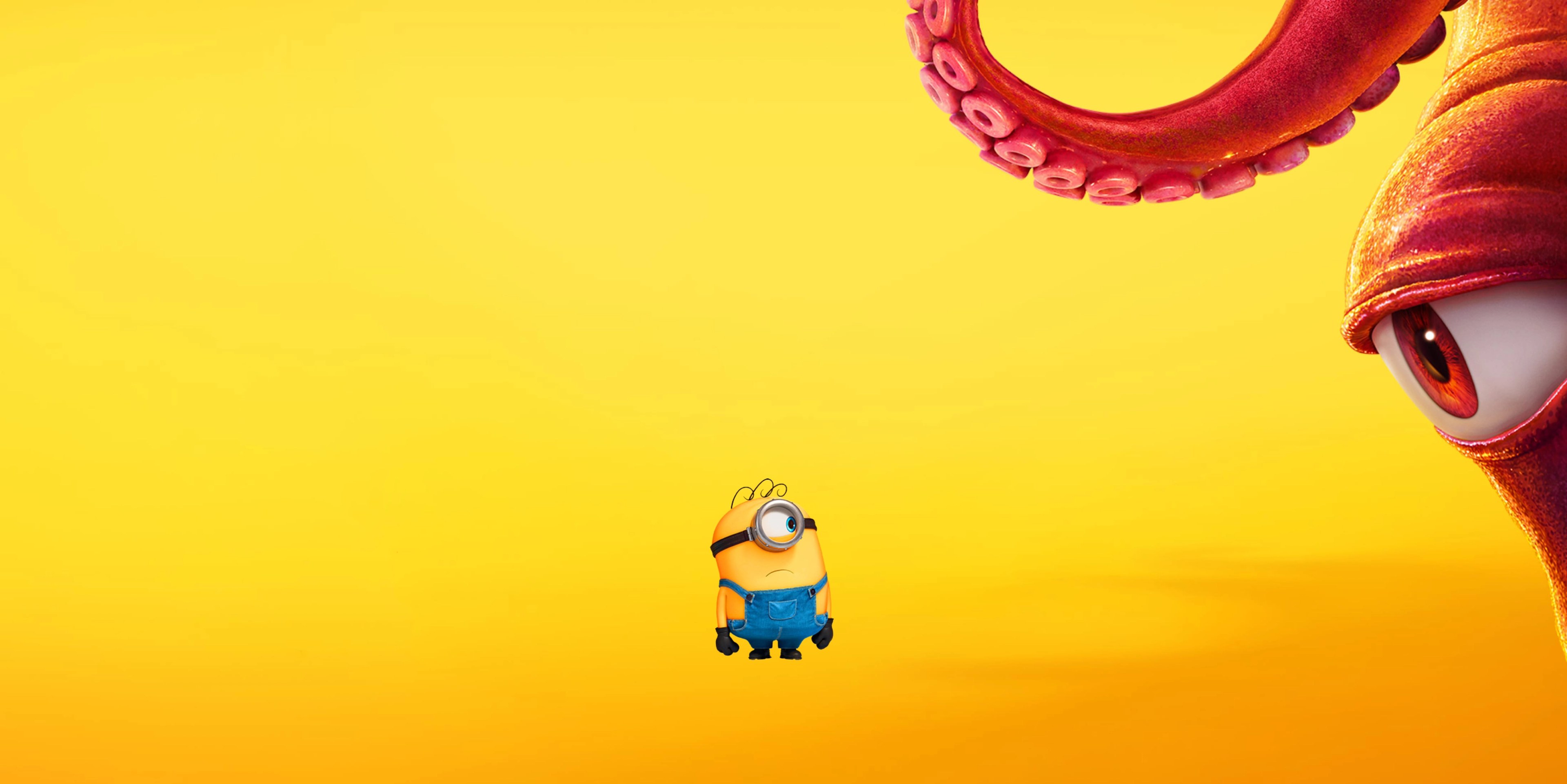
That sounds like too much because, on paper, it is too much. The movie's saving grace is that most of the pieces are individually funny enough to justify the clutter. Trey Parker's Goomi has a slippery comic presence, especially because the voice sits close enough to familiar Parker territory to feel mischievous without turning the character into a total reference joke. Irene gives the animation team permission to get stranger and more elastic, especially when the movie follows her through a bright 1920s Los Angeles or imagines what it looks like inside a creature that has swallowed half the set dressing.
The second half also keeps the film from becoming too precious about its old-Hollywood affection. A movie that only wants to prove it has seen the classics can get stiff quickly. Minions & Monsters is too chaotic for that. It pulls from early Hollywood, 1950s sci-fi, monster pictures, noir, studio politics, and broad kid comedy with the accuracy of a Minion operating heavy machinery. Purists can object to the timeline all they want; the film is not trying to be a textbook. It is using movie history the way a child uses a costume trunk, grabbing whatever makes the next scene funnier.
Still, the segmentation is noticeable. Max becomes less central than he should be. The studio-lot material is so strong that leaving it behind feels like trading the movie's best joke for a more familiar action-comedy shape. That does not sink the back half, but it does make the film feel like two very good concepts wrestling for the same 90 minutes. The monsters are fun. The Minions as silent-era sensations are better. A sharper version of the movie would have found a way to keep those ideas fused instead of letting one replace the other for long stretches.
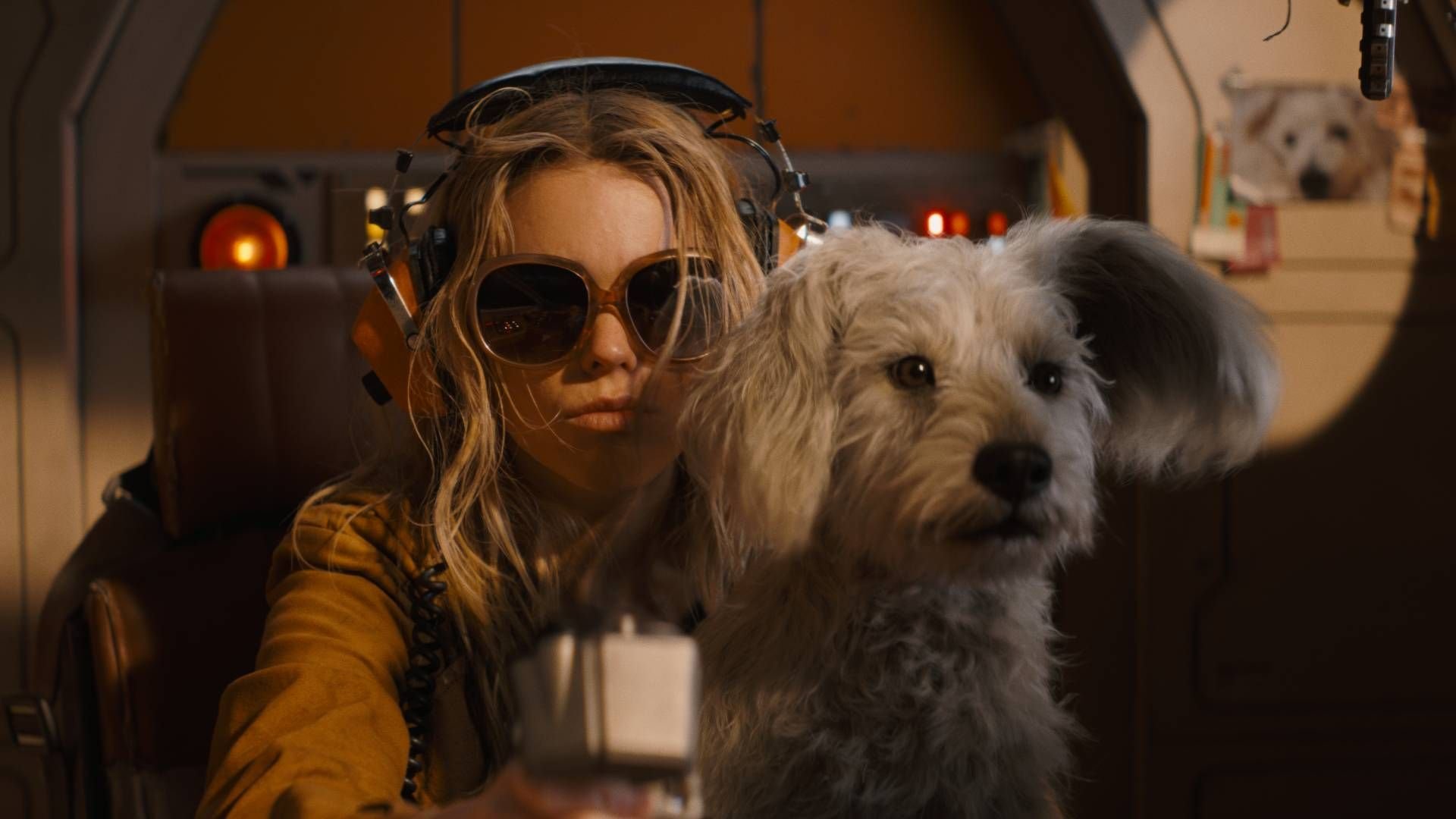
The pacing helps. Pierre Coffin and Brian Lynch keep the movie moving with the confidence of people who know a gag can die if it has to stand still for too long. That speed covers some bumps, though it also means a few characters arrive more as comic shapes than fully satisfying parts of the story. Jesse Eisenberg's Dort and Zoey Deutch's Debbie are funny ideas, and the movie finds room for their oddball dynamic, but they underline the film's maximalist impulse. Minions & Monsters is rarely empty. Its danger is the opposite: it can feel one subplot away from bursting.
Why This Works for Kids and Tired Adults
The real surprise is how well Minions & Monsters plays to two audiences at once. Kids get the dependable surface pleasure: slapstick, strange creatures, bright motion, tiny characters making terrible choices at high speed. Adults get a movie that is unusually self-aware about why these characters work and why they have become exhausting. The film does not apologize for being a Minions movie, which is good because nobody needs a defensive Minions movie. Instead, it gives the franchise a sharper playground and trusts the setting to refresh the formula.
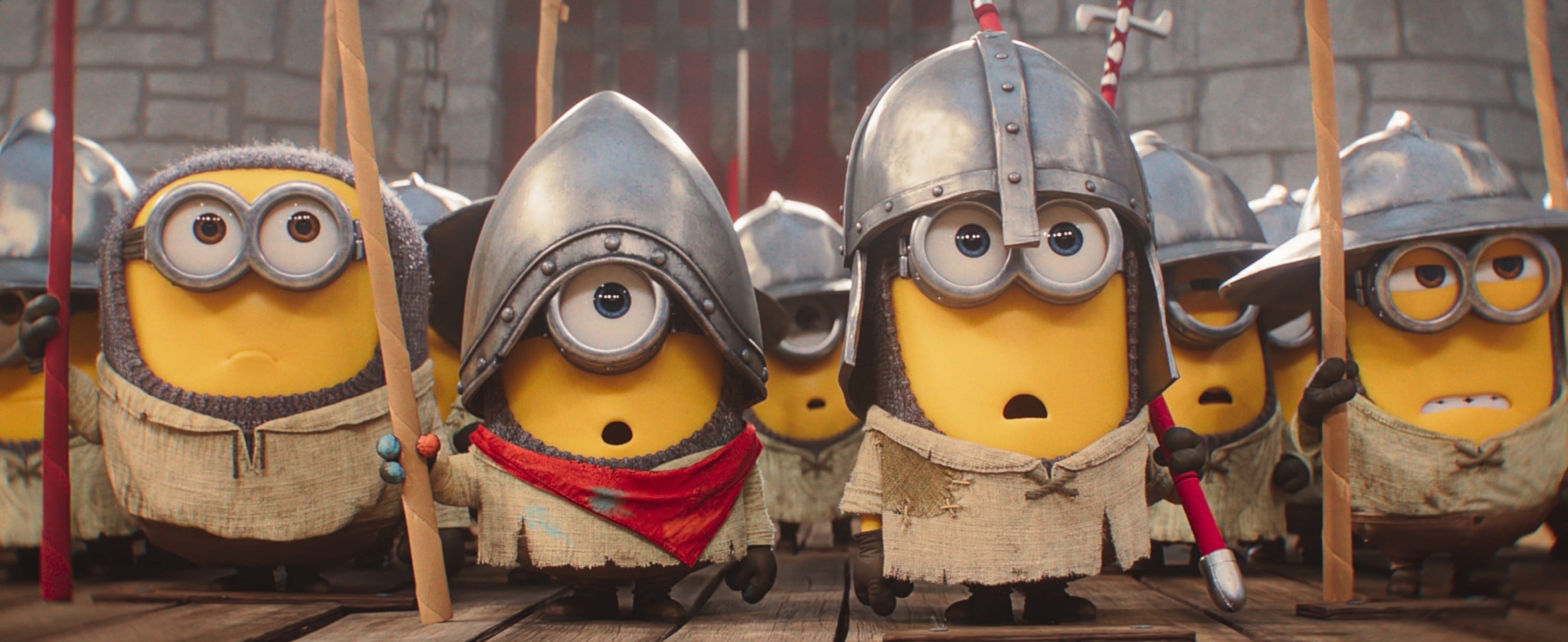
That is why the movie feels closer to classic Looney Tunes energy than most of the series. The Minions have always had cartoon violence, but this entry gives that violence a show-business frame. Sets are there to be ruined. Costumes are there to be misread. Fame is there to arrive too quickly and disappear the second technology changes. The jokes have more direction because the world around the Minions has clearer rules to break. That may sound like a small distinction, but it is the difference between random noise and comic escalation.
The emotional material is lighter than in the best Despicable Me movies, and that is fine. This is not trying to recreate Gru's found-family arc, nor should it. James' artistic ambition gives the movie just enough feeling without pretending that the Minions have suddenly become deep dramatic vessels. The film's sweeter idea is that storytelling belongs to the ridiculous too. James wants to turn what he sees into images. The movie around him turns old Hollywood into a playground. For a franchise often accused of functioning like a toy aisle with punchlines, that affection for making things gives Minions & Monsters a warmer pulse.
It also helps that the film is not afraid to be visually specific. The best studio sequences have the pleasure of seeing old genres filtered through Illumination's rounder, shinier house style. The monster material opens up different textures: torches, ooze, strange interiors, creatures that look like they wandered out of another franchise and got trapped in a Minion's production schedule. This is not the most beautiful animated movie of the year, but it is more visually playful than the premise requires, and that generosity matters.
The caveat is that the film's very best version of itself is so clear that the weaker shape around it becomes easier to spot. When Minions & Monsters is about silent-era fame, the transition to sound, and the absurdity of a Minion trying to survive an industry built on image, it feels inspired. When it becomes a monster chase with several extra comic threads, it is still fun but more ordinary. That gap keeps the movie from greatness. It does not keep it from being the most enjoyable thing this franchise has delivered since its early peak.
Parents who have sat through weaker franchise entries may be the audience most surprised by it. Minions & Monsters is not merely tolerable. It is frequently clever. It has enough movie-love to reward adults, enough slapstick to satisfy kids, and enough franchise self-awareness to make the Minions feel less like an obligation and more like performers in a joke built for them. That is a bigger achievement than it sounds. The film does not make the series new forever. It does prove there was still one very good angle left.
Verdict
Minions & Monsters works because it gives the franchise a premise that actually fits the Minions instead of merely unleashing them on another plot. The old-Hollywood setup turns their gibberish, timing, and destructive innocence into a smart silent-comedy engine, while the monster half adds enough visual weirdness to keep the movie from becoming a museum tour. It is messier once the story leaves the studio-lot groove, and a few supporting ideas crowd the frame, but the best gags are sharp, the movie-history affection is real, and the family-audience balance is stronger than expected. For the seventh Despicable Me universe movie, that counts as more than a pleasant surprise. It is proof the franchise can still find a fresh stage when it stops coasting.