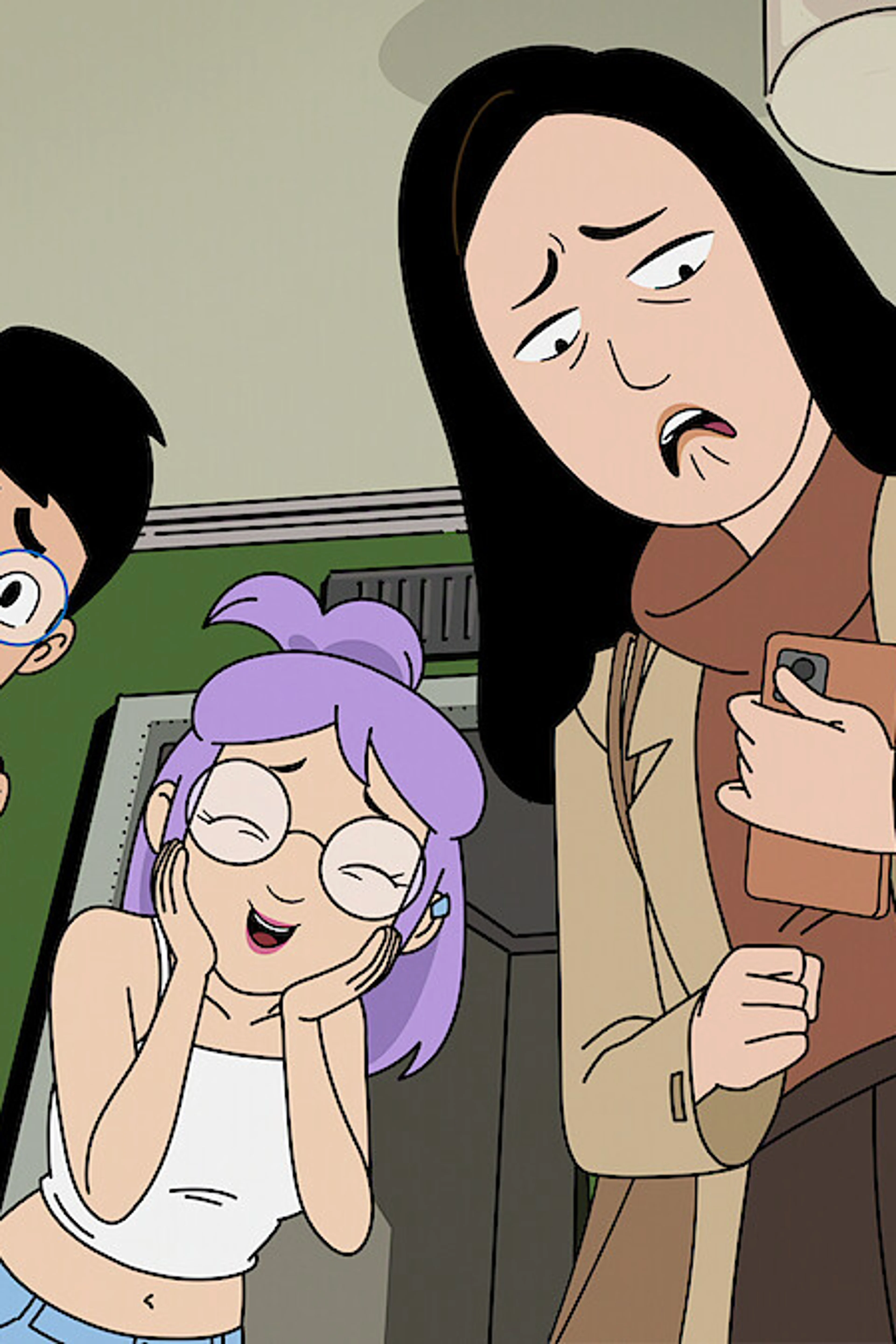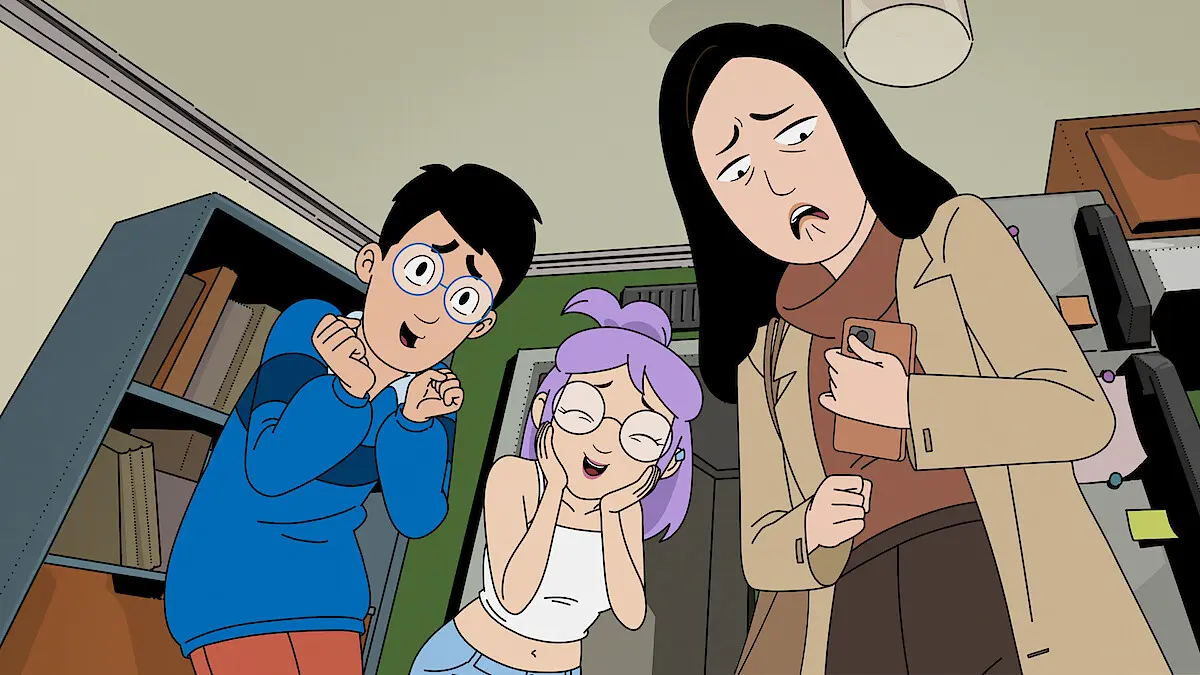

DANG! begins with three adults who know exactly how to make one another feel twelve years old again. Andrew and Eunice share a cramped New York apartment and a comfortable lack of direction. Their older sister Ruthie arrives after destroying the polished life that made her the family success. She is pregnant, separated from her husband, and suddenly dependent on the siblings she usually judges. Andrew and Eunice respond with concern, delight, and the immediate recognition that the favorite child has finally joined them in failure.
That setup gives Netflix’s eight-episode adult cartoon a useful engine. Ruthie tries to control a crisis that cannot be organized. Andrew avoids conflict until a small lie becomes an expensive disaster. Eunice treats every responsibility as an attack on her freedom. Each sibling is selfish in a different direction, yet none of them can stay away when another needs help. The problem is that the series understands their bond more clearly than it understands how to build a full season of jokes around it.
DANG! is easy to watch, bright to look at, and occasionally very funny. It is also full of references and repeated character bits that already feel worn after roughly four hours. The leads keep rescuing material that asks them to play the same flaw again. A 6.4 score fits a first season with a real family at its center and a comic voice that still needs sharper choices.
The Dang siblings make the show worth watching
Andrew, Eunice, and Ruthie sound like people who have spent years collecting evidence against one another. A question can become an old accusation in seconds. An insult can also contain useful advice that nobody else would be allowed to give. The strongest scenes do not pause to announce that the siblings care. They show it through interruption, annoyance, practical help, and the certainty that an argument will not end the relationship.
Andrew Law gives the middle brother a nervous, apologetic speed that makes his people-pleasing visible before the script names it. Andrew can handle a chaotic sister, casual dating, and city life, but a simple disagreement sends him into elaborate avoidance. The performance is funniest when the panic remains small. When an episode keeps enlarging the same mistake, the awkwardness becomes less surprising even though Law never loses the character’s basic sweetness.
Poppy Liu makes Eunice the loudest sibling without turning her into pure noise. Eunice earns money through a strange livestream, refuses basic adult skills, and treats attraction as an emergency. Her confidence is usually a disguise for fear that someone may expect more from her. Liu can make a selfish line sound both ridiculous and defensive, which gives Eunice more shape than the scripts sometimes offer.
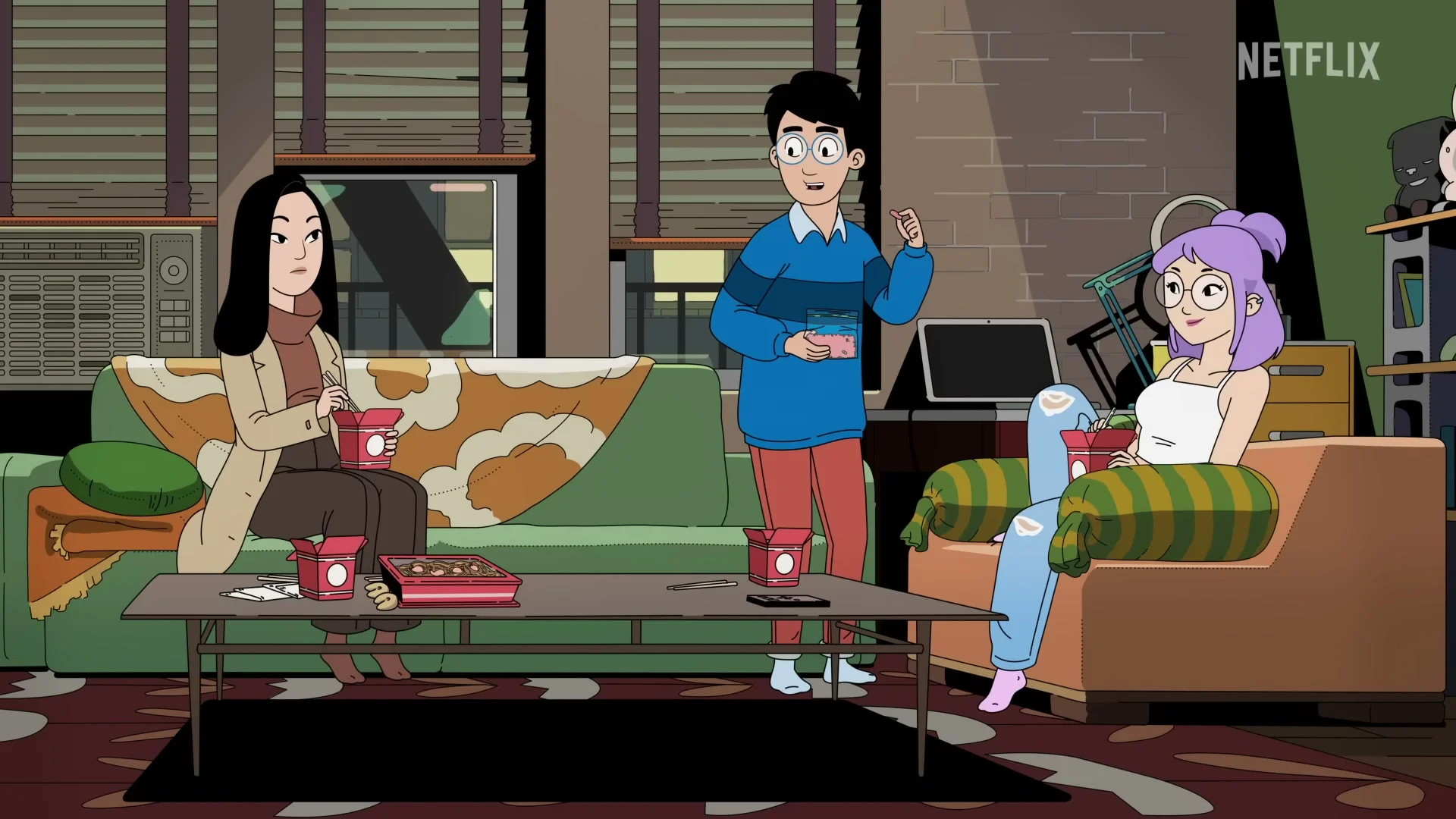
Stephanie Hsu has the hardest role because Ruthie begins as the person most certain that she is above the others. Ruthie is a successful corporate lawyer who has built adulthood around work, control, and being the daughter her parents can praise. Her pregnancy and separation expose how fragile that position was. Hsu keeps the sharpness, but she also lets embarrassment enter the voice. Ruthie is not suddenly nicer. She is simply no longer able to pretend that success protected her from bad choices.
The trio improves every story they share. Andrew softens Eunice without parenting her. Eunice punctures Ruthie’s authority before it can dominate the room. Ruthie forces both younger siblings to notice the parts of life they have avoided. The show is weaker when an episode separates them for long stretches and asks one trait to support an entire plot. It becomes more specific the moment all three are back in one room, deciding who failed worst.
A late visit to their parents gives the season its clearest reason for keeping this family together. Old expectations return immediately, along with the accents, roles, and defenses the siblings learned before New York. The episode does not need a large revelation to explain them. It shows how quickly adults can become the children their parents remember. That material gives Ruthie’s crisis and Andrew and Eunice’s drift a shared source without excusing any of them.
The jokes repeat before the characters can grow
DANG! aims at a very current version of adult life: dating apps, livestream work, corporate cruelty, therapy language, celebrity products, online trends, and people who use references as a substitute for conversation. Some of that detail gives the series a recognizable New York pulse. The better jokes come from how a character uses the world. Eunice stepping on bread for paying viewers is not funny only because the job is strange. It is funny because she sees no reason to be embarrassed by a system that rewards her.
Too often, the writing points at a recognizable thing and waits for recognition to become a punchline. A reference to Facebook, Skibidi Toilet, a familiar diet-drug obsession, or an exaggerated corporate slogan can work once. Repeating that approach makes the show sound like a feed assembled from the week an episode was written. The references arrive faster than the characters can change them into something personal.
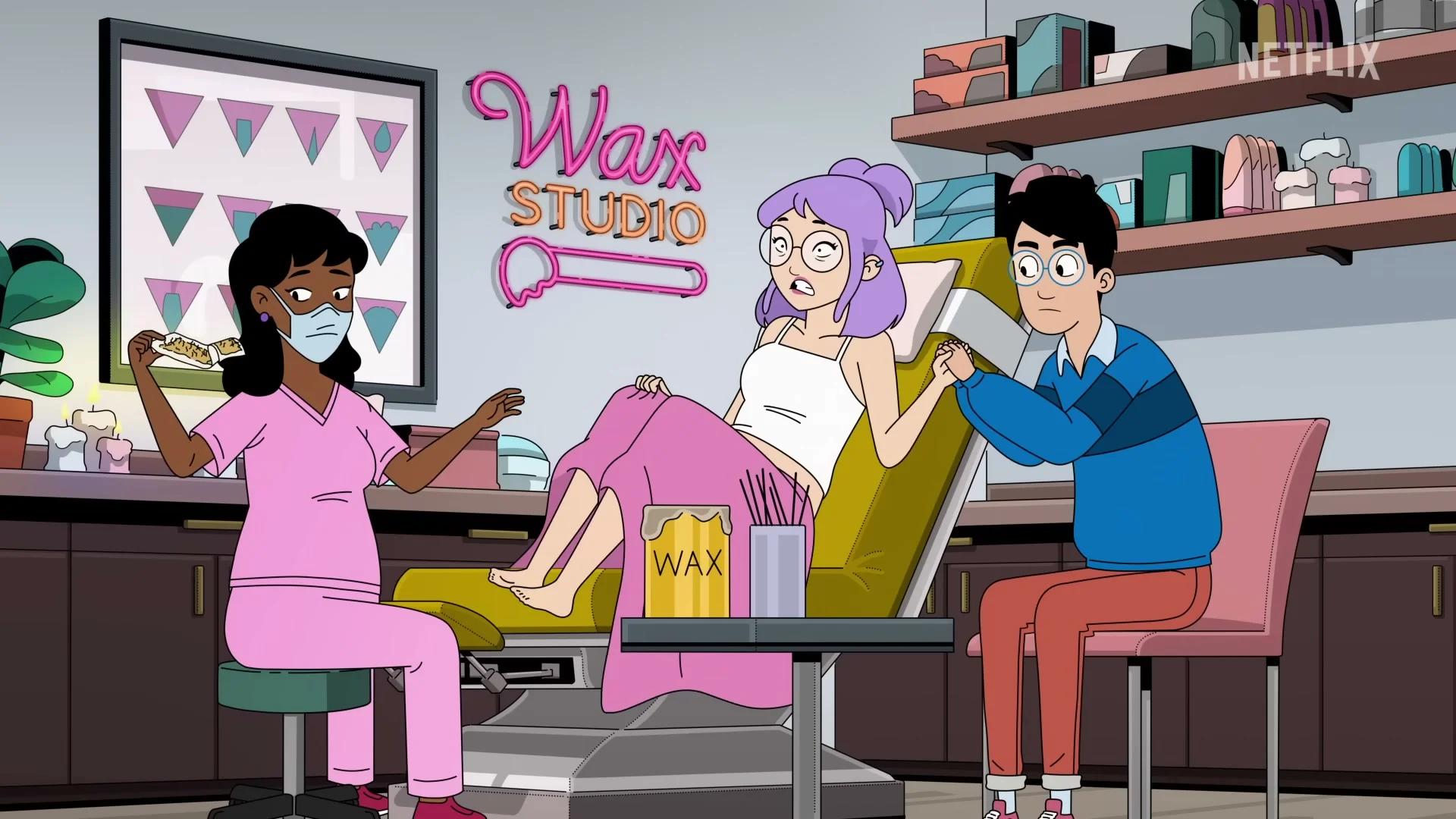
The season also overuses each sibling’s main weakness. Andrew avoids saying no. Eunice refuses to plan. Ruthie assumes competence gives her moral authority. Those are strong starting points for a sitcom because they create conflict without inventing a villain every week. They become limiting when the episode shape remains predictable: a flaw causes an obvious problem, the character doubles down, humiliation follows, and the family restores enough order for the next story.
SungWon Cho shows how well a narrow supporting part can work. Peter is the married colleague Ruthie believes understands her, even while every sentence reveals another reason to distrust him. Cho delivers the character’s awful confidence without searching for sympathy. Warren, Ruthie’s eager husband, also becomes funny because his need to please fits into smaller appearances. These characters can stay broad because the season does not ask them to hold its emotional center.
The crude material varies even more. Sex, bodies, drugs, vomiting, injuries, and workplace cruelty can all produce good adult animation. Here they sometimes expose a character’s terrible judgment, and sometimes exist only to make a scene louder. The series is funniest when the embarrassment has a social consequence. A shocking image without that pressure usually passes before it develops into a real joke.
That inconsistency makes the TV-MA rating worth taking seriously. This is not family animation with a few jokes aimed over children’s heads. The season includes frequent sex talk, casual drug references, dating situations, harsh language, cartoon injuries, and deliberately gross images. Most of it is stylized rather than realistic, but the subjects and dialogue are plainly adult. Viewers looking for a warm sibling story will still find one, surrounded by material designed for an older audience.
The episodic structure does have an advantage. At about 25 to 27 minutes each, the chapters move quickly and rarely trap a weak idea for long. A new workplace disaster, date, family demand, or public embarrassment appears before the previous one becomes exhausting. The season can be finished in a few nights without a complicated plot to remember. The same speed, however, prevents several promising conflicts from changing the siblings in lasting ways.
Animation gives the comedy a cleaner shape
The visual design is more controlled than the dialogue. Titmouse gives the characters clean outlines, soft shapes, bright color, and slightly unusual proportions. Small hands and feet make gestures easy to notice. Faces remain readable even when three people are talking across a cluttered apartment. The approach is not as wild as the title might suggest, but that restraint helps the sudden physical jokes stand out.
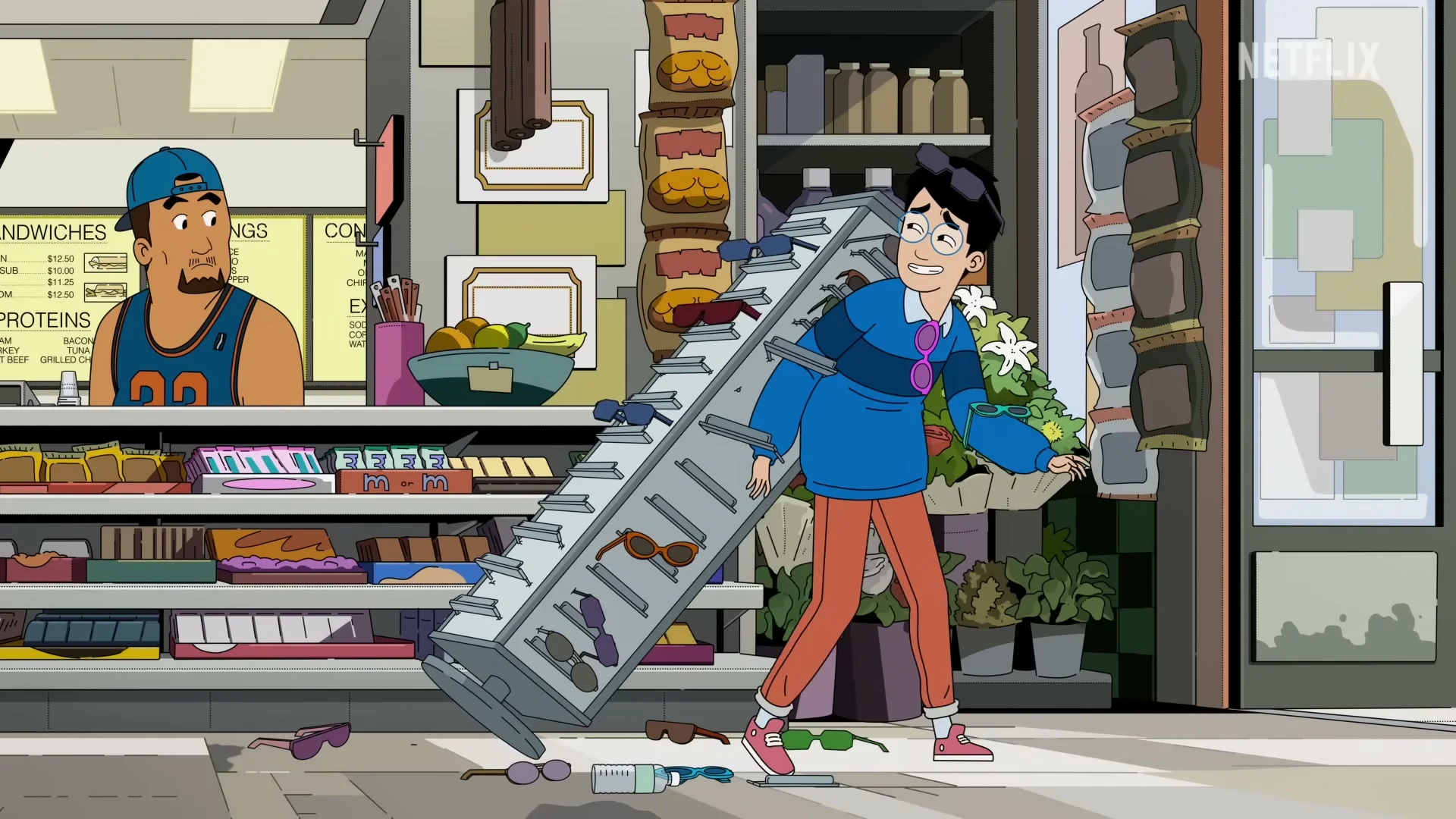
Animation also lets New York shift from an ordinary deli or apartment into a stranger version of itself without warning. A body can bounce through a public disaster, a grotesque boss can dominate a room, and a small lie can produce impossible piles of merchandise. The drawings make those changes legible instead of realistic. The best visual jokes begin in a normal background and reveal one detail that the dialogue never has to explain.
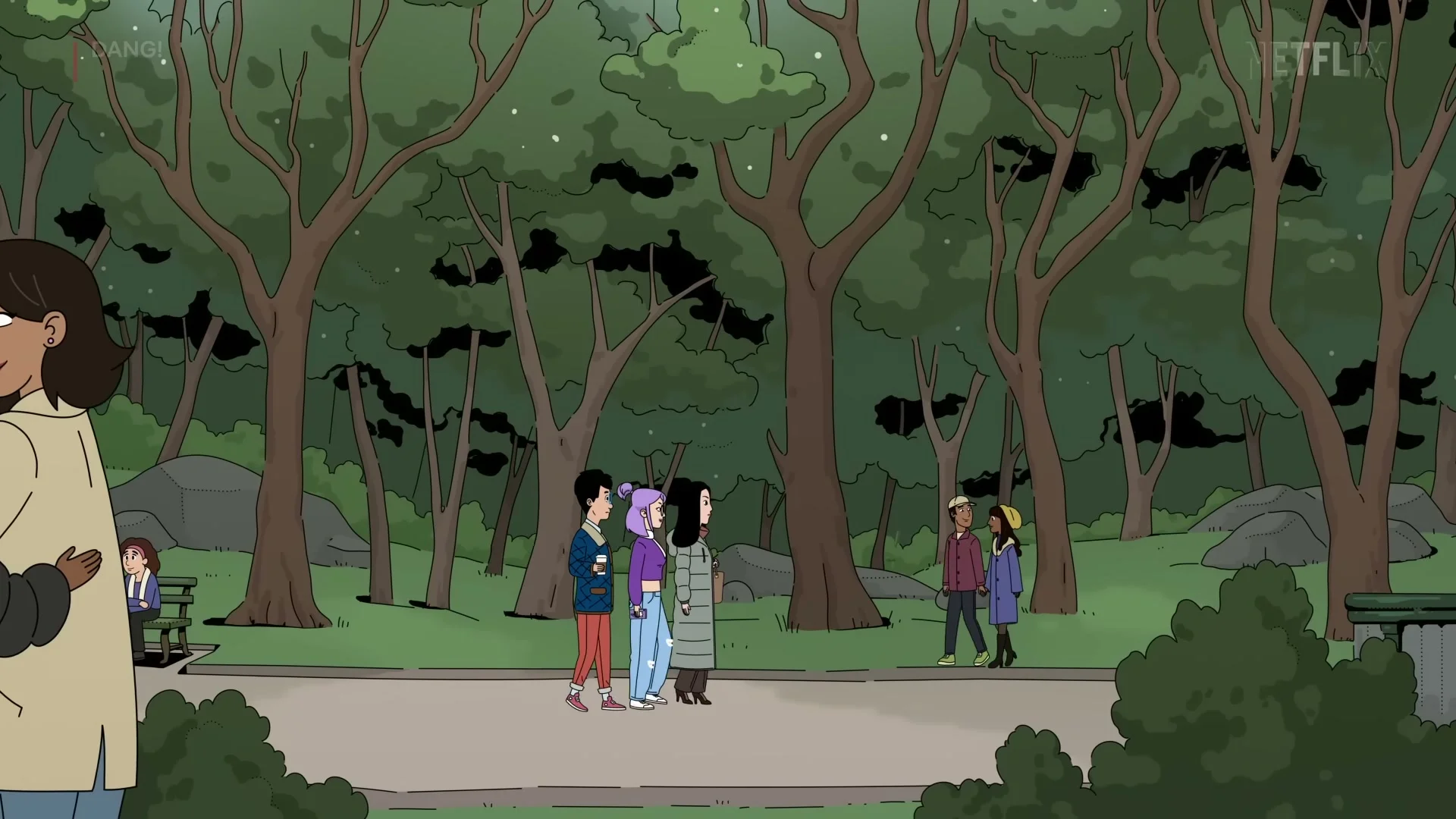
The city feels most alive through practical details: coffee cups, crowded shops, narrow rooms, park benches, office furniture, and the constant presence of strangers during private humiliation. That specificity supports the family story because Andrew and Eunice have built a shared life there before Ruthie arrives. She does not merely enter a setting. She enters routines, jokes, and failures that already belong to the younger two.
The voice performances and animation often work together better than the punchlines. Hsu’s clipped frustration matches Ruthie’s rigid posture. Liu’s loose confidence fits Eunice’s willingness to turn any public place into a stage. Law’s pauses and quick corrections make Andrew look physically smaller whenever he tries to avoid conflict. Even a weak exchange usually communicates who controls the moment.
DANG! makes the most sense for viewers who want an adult sitcom about Asian American siblings, gay dating, New York work, and the embarrassing distance between a modern vocabulary and basic maturity. The cultural and family details are strongest when nobody stops to translate them. Viewers who need every joke to travel across generations may find the references tiring. Anyone already exhausted by selfish animated adults may also struggle through the early episodes.
A second season would not need a new premise. It would need more trust in the existing one. Let Andrew’s avoidance produce a different response after the first disaster. Let Eunice discover a skill that does not erase her chaos. Let Ruthie rebuild without becoming the perfect sister again. Most importantly, let the three spend more time reacting to one another and less time naming whatever the internet is discussing that week.
DANG! official footage
5 screenshotsA 6.4/10 score reflects a comedy with a stronger center than its uneven surface suggests. The animation is clear, the cast understands the sibling tension, and the final family material points toward a richer show. Repetitive flaws, crude detours, and fast-aging references keep interrupting that promise. DANG! is worth trying for the trio, but the siblings are consistently better than the jokes written around them.
DANG! Season 1 is now streaming on Netflix. For the cast, premise, and the story behind its creator voicing Andrew, read how Andrew Law became the lead of DANG!.