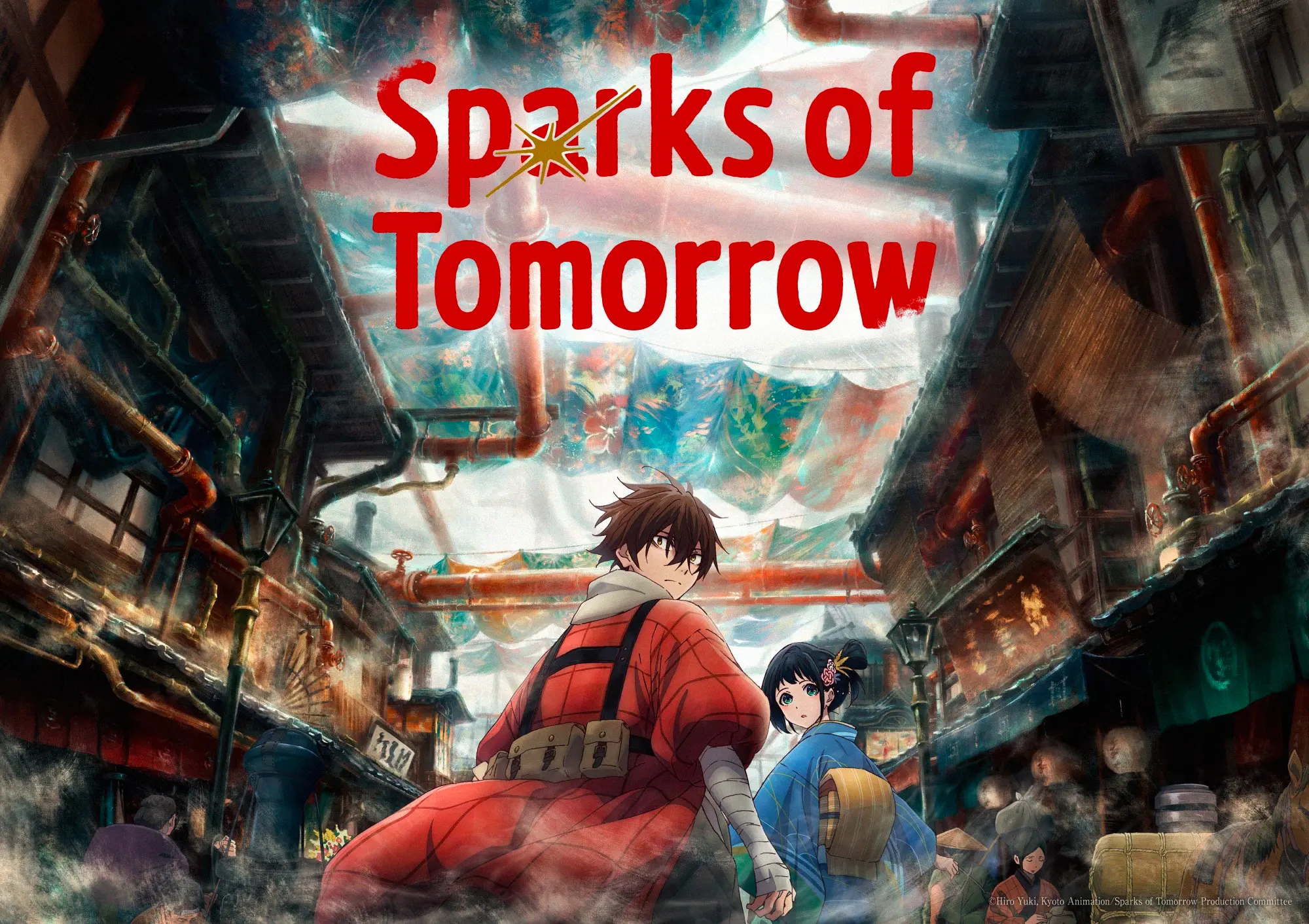
Sparks of Tomorrow turns the arrival of electricity into something more personal than a history lesson. Set in early 20th-century Kyoto, the story follows Kihachi after he witnesses the possibilities of the new electrical age with Seiroku. Years later, grief has hardened him, and a meeting with a girl in prayer pulls the story toward a softer question: what does progress mean if the people living through it have already lost faith?
The premise gives Kyoto Animation, the studio behind many of modern anime's most delicate character dramas, room to make small feelings look enormous. Sparks, light, smoke, streets, prayer, and silence can all become part of the emotional language. The series is not selling itself as a battle spectacle. Its appeal is the contrast between a country entering a new technological era and young characters trying to survive private sadness.
Netflix positions Sparks of Tomorrow as a worldwide streaming title, which makes it one of the more approachable new anime entries for viewers who want a complete tonal break from louder franchise machines. The draw is atmosphere, historical texture, and the way a new invention can carry hope for one person and pain for another.
Sparks of Tomorrow feels built for viewers who like anime that lingers. It is about a bright future arriving before the heart is ready for it.