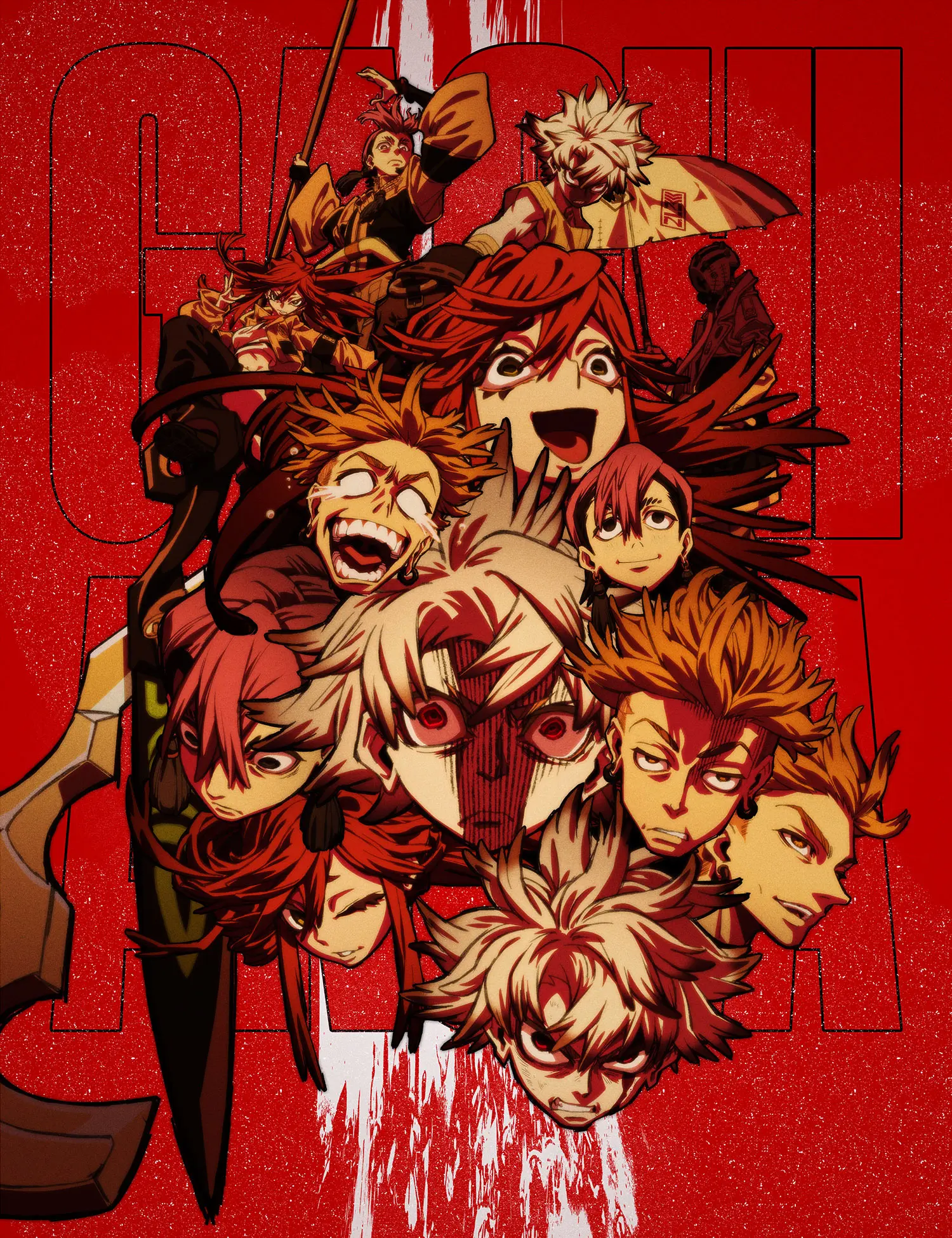
Gachiakuta starts with a world that has already decided who is disposable. Rudo lives under a system that treats people and objects the same way: once they are unwanted, they get thrown away. After he is cast into the Pit, the story turns that cruelty into action, sending him through a polluted underworld filled with monsters, scavengers, and fighters who weaponize the things society abandoned.
The franchise began as Kei Urana's manga, with graffiti design work by Hideyoshi Andou giving it a jagged street-art edge. That look is a huge part of the appeal. Gachiakuta does not feel polished in the gentle sense. It feels scraped, loud, angry, and tactile, like every weapon and piece of clothing has been dragged through the same trash-strewn world as the characters.
The anime adaptation comes from bones film, with Crunchyroll tied to the series' streaming rollout. That gives the franchise a clear screen identity for viewers who want shonen action but are tired of clean arenas and tidy power systems.
Gachiakuta works because its battles come from resentment as much as strength. Rudo is not simply trying to win fights; he is trying to claw meaning out of a world built to erase him. The best entry point is the anime for motion and impact, while the manga remains the place to feel the rawest version of Urana's designs and rage.