
Amy Poehler wants a straight answer from Andrew Garfield: does he consider himself a method actor? Garfield starts to explain the term, notices the way she is looking at him and jokes about the sort of headline the answer could produce. Poehler keeps asking.
The exchange, from his September 29 Good Hang interview, is funny because neither person lets the other turn it into a tidy speech. But Garfield does eventually answer. He accepts the description in a qualified way, then explains why he does not think serious preparation has to mean making everyone else on a production miserable.
His distinction is between doing personal work for a performance and letting that work become a problem for the cast and crew. Poehler's teasing gets him to that point more directly than a broad question about his approach might have done.
Poehler will not let the question go
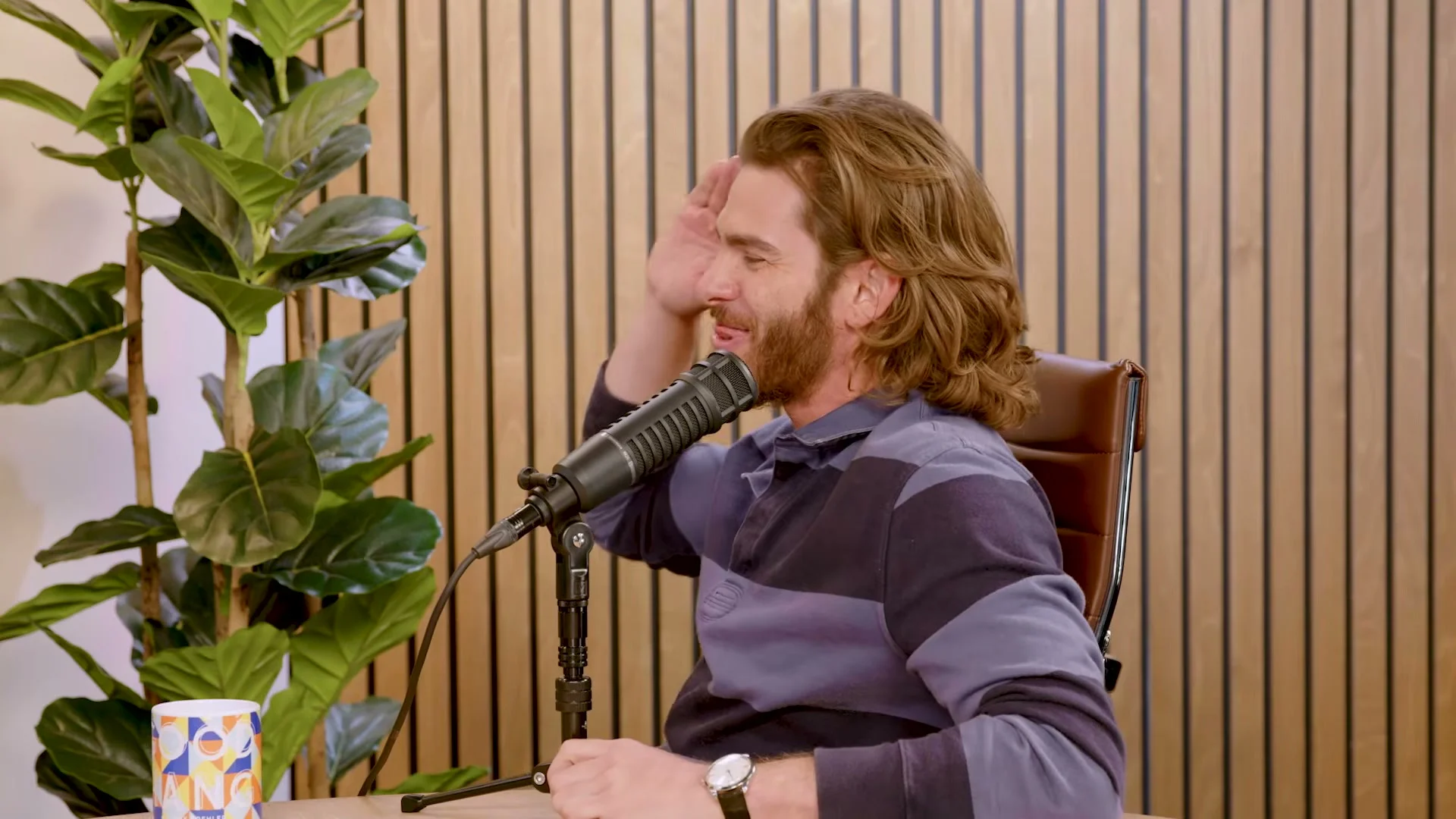
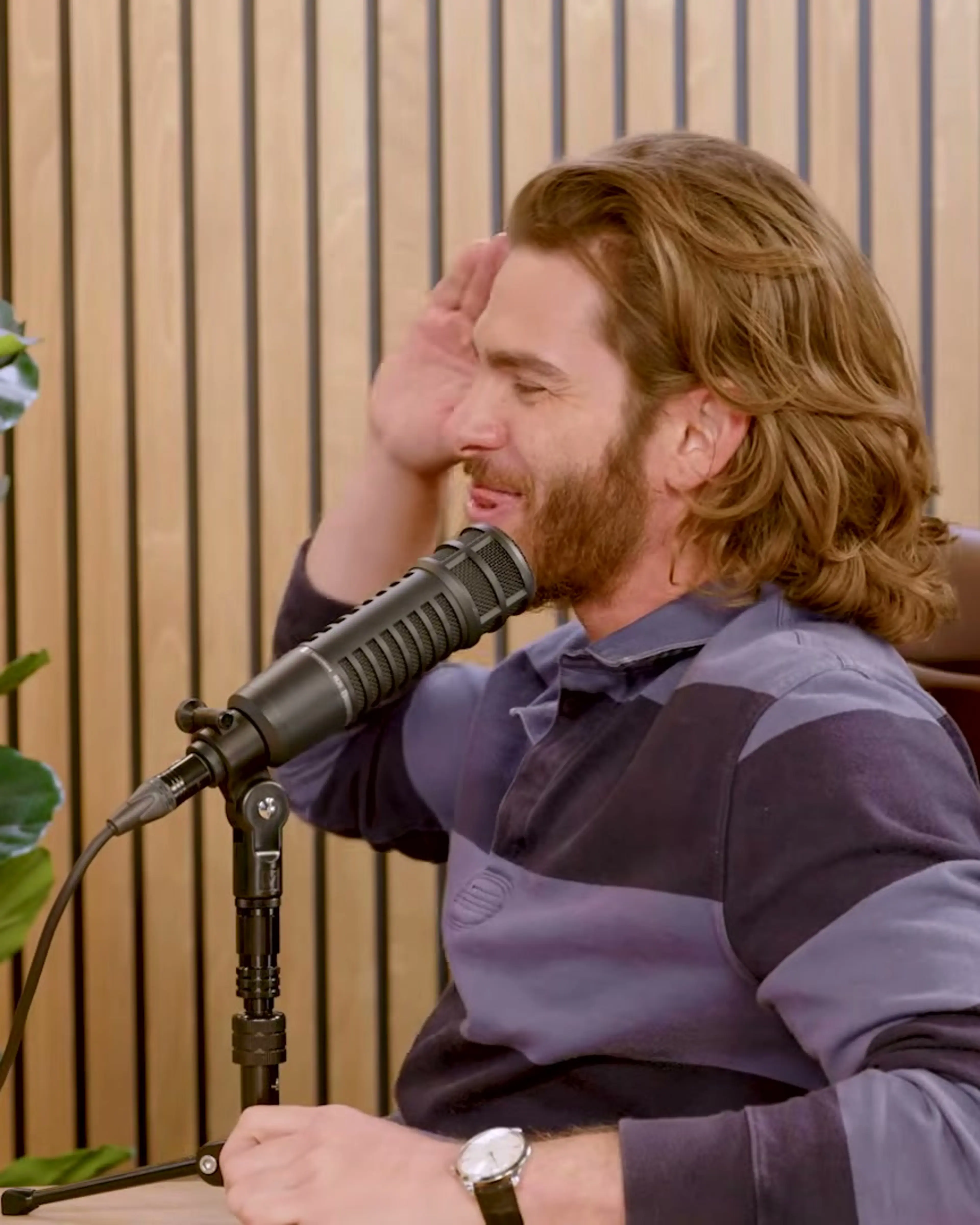
The method-acting discussion begins around 33:06 in the full interview. Poehler asks whether Garfield considers himself a method actor and jokes about who she is speaking to if he does. He responds to her expression before giving the answer she wants.
She presses again, keeping the exchange playful but refusing to accept an explanation that never reaches a yes or no. Her follow-up is short:
“I mean, are you though?”

The joke works because the question is recognizable. Fans hear about actors changing routines, learning skills or living with a role for a long time, then try to fit all those choices under one label. Poehler asks Garfield to say whether that label applies to him, instead of letting him talk around it.
He eventually gives a qualified yes. That qualification is not a refusal to answer; it leads into the distinction he wants to make. He thinks the term has been misunderstood and adopted in ways that do not accurately describe the work he values.
What Garfield means by method
Garfield brings up Stanislavski and Strasberg when explaining his approach. In his account, the useful part is finding a personal connection to imagined circumstances, so a performance is not only an outward display of a character's behavior.
That is his explanation of the work, rather than a claim that every actor who uses the term follows an identical routine. He is talking about how a scene can feel connected to something the performer understands internally. The specific preparation can differ from role to role.
The difference is important for viewers who mainly encounter acting preparation through dramatic anecdotes. Learning something difficult for a film or working intensely on a role does not, by itself, tell you how that person treats colleagues. Garfield separates those questions rather than using the amount of effort as a defense for every possible behavior.
He is not dismissing preparation. He is rejecting the idea that a demanding approach must make the set harder for other people to work on. That gives his answer a practical limit that can get lost when a conversation stays with the label alone.
The cast and crew still matter
Garfield says there is a way to approach the work without disrupting the people around him. His phrase is direct:
“There's a way of doing it that's generous.”
He follows that by talking about the rest of the cast and crew and saying that losing a great deal of weight is not a requirement. Poehler adds playfulness to the discussion, and Garfield agrees. The conversation makes room for seriousness and enjoyment instead of insisting that one has to cancel out the other.
This is the most useful part of the answer. A performer can care deeply about a scene while recognizing that other actors and crew members have work to do too. Garfield describes personal preparation as something that should help the performance, not automatically give him permission to control everyone else's day.
It also changes how his initial qualified yes sounds. He is not using it to announce an extreme routine or make a new claim about a particular production. He is explaining what he believes the approach can be when it is used considerately.
Who’s in the conversation?

Why he brings up Paul Newman
The discussion moves from the label to performances Garfield responds to. He talks about director Sidney Lumet and recalls an anecdote involving Paul Newman: the actor was asked to come back to a scene after finding a more personal understanding of what it required.
Garfield presents it as a story he remembers from Lumet's writing, not as something he witnessed. The point he takes from it is that an actor can know the actions in a scene and still need to understand what those actions mean to the character.
That example is less about an elaborate off-camera routine than a change in how a scene is played. It makes sense as a follow-up to his earlier explanation: personal connection matters to him because he thinks viewers can feel it in the work.
Poehler stays in the conversation rather than treating the reference as the end of the question. That helps the interview move between a useful acting discussion and two people joking with each other. The subject becomes clearer without the episode turning into a lecture on one acting school.
A joke becomes a fairly clear answer
The exchange is worth watching in order, because the teasing comes before Garfield's explanation. At first he reacts to Poehler's insistence; then he gives a qualified answer; then they discuss what that answer means. Taking only one of those moments would make the conversation sound either more evasive or more solemn than it is.
There is no announcement here that he is retiring a technique, criticizing a named co-star or describing misconduct on a particular set. His comments are about his own understanding of the term and the way he wants the work to function around other people.
That leaves a simpler answer than the initial back-and-forth suggests: Garfield values personal, committed preparation, but does not believe it has to be disruptive. Poehler gets there by continuing to ask the straightforward question while leaving room for him to explain.
The full Good Hang interview is included here. Start around 33:06 for the question; Garfield's longer explanation begins around 34:01. The surrounding laughter and interruptions are part of the exchange, and hearing both people makes his answer easier to understand than reading the label on its own.