Pixel Twelve
Her Story Beginner Guide: Search the Clips and Understand the Five-Result Limit

How To

Her Story Beginner Guide: Search the Clips and Understand the Five-Result Limit

A spoiler-light, screenshot-led guide to the Her Story police video database: search terms, first five results, clip timestamps, user tags and a simple note-taking method.

By Sophie MitchellGame: Her StoryVerified Sep 27, 2026
Guide Type
How To
Last Verified
Sep 27, 2026

Guide details

Overview

A spoiler-light, screenshot-led guide to the Her Story police video database: search terms, first five results, clip timestamps, user tags and a simple note-taking method.

What you are looking at when the game opens

Her Story is not a game where you walk an investigator through a building. The screen is an old police computer. The important window is called L.O.G.I.C. Database. It contains a search field and small video thumbnails. Each thumbnail opens part of an interview with a woman whose husband is missing. You decide what words to search and how to connect the answers. There is no need to know her story before you begin.
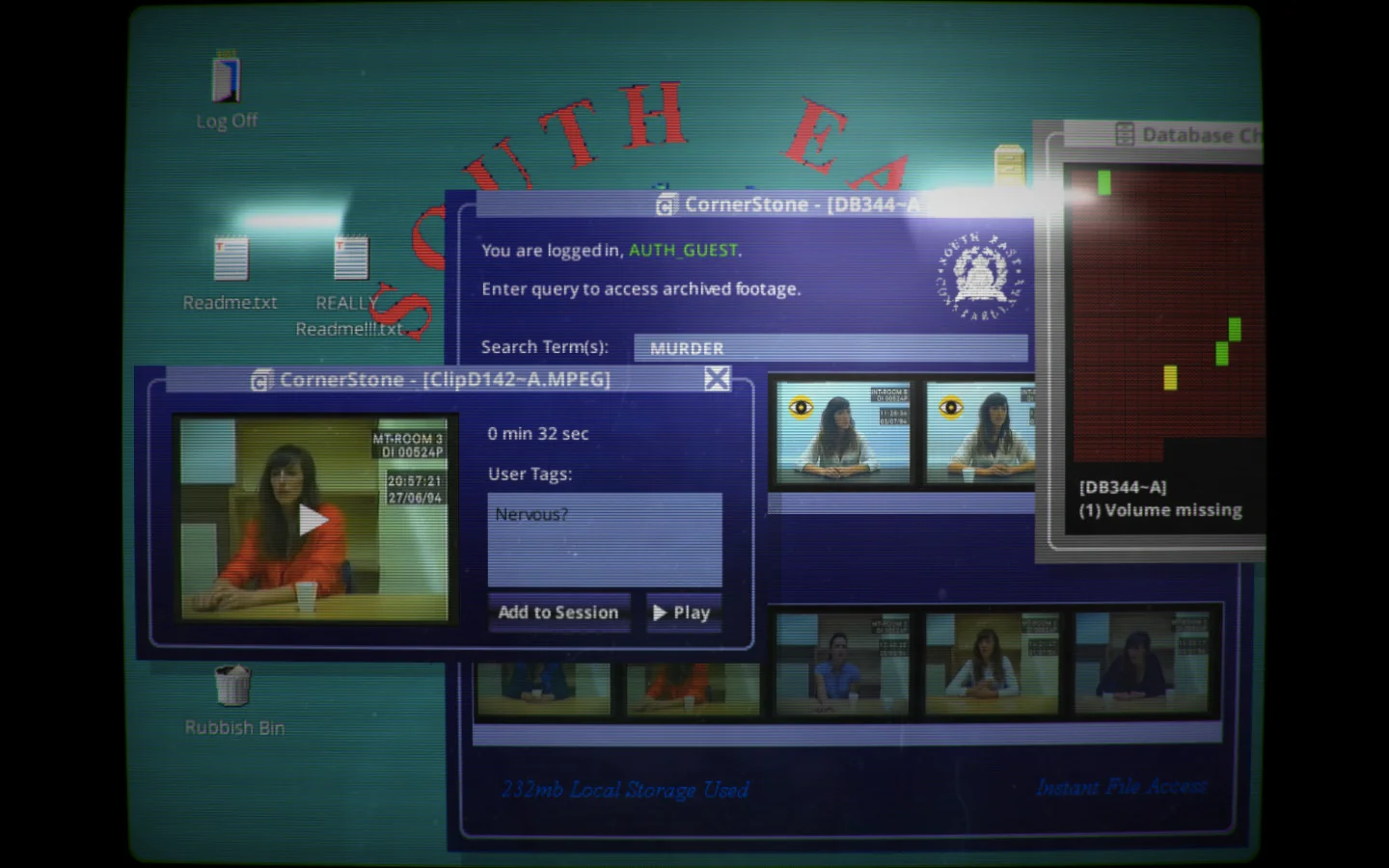
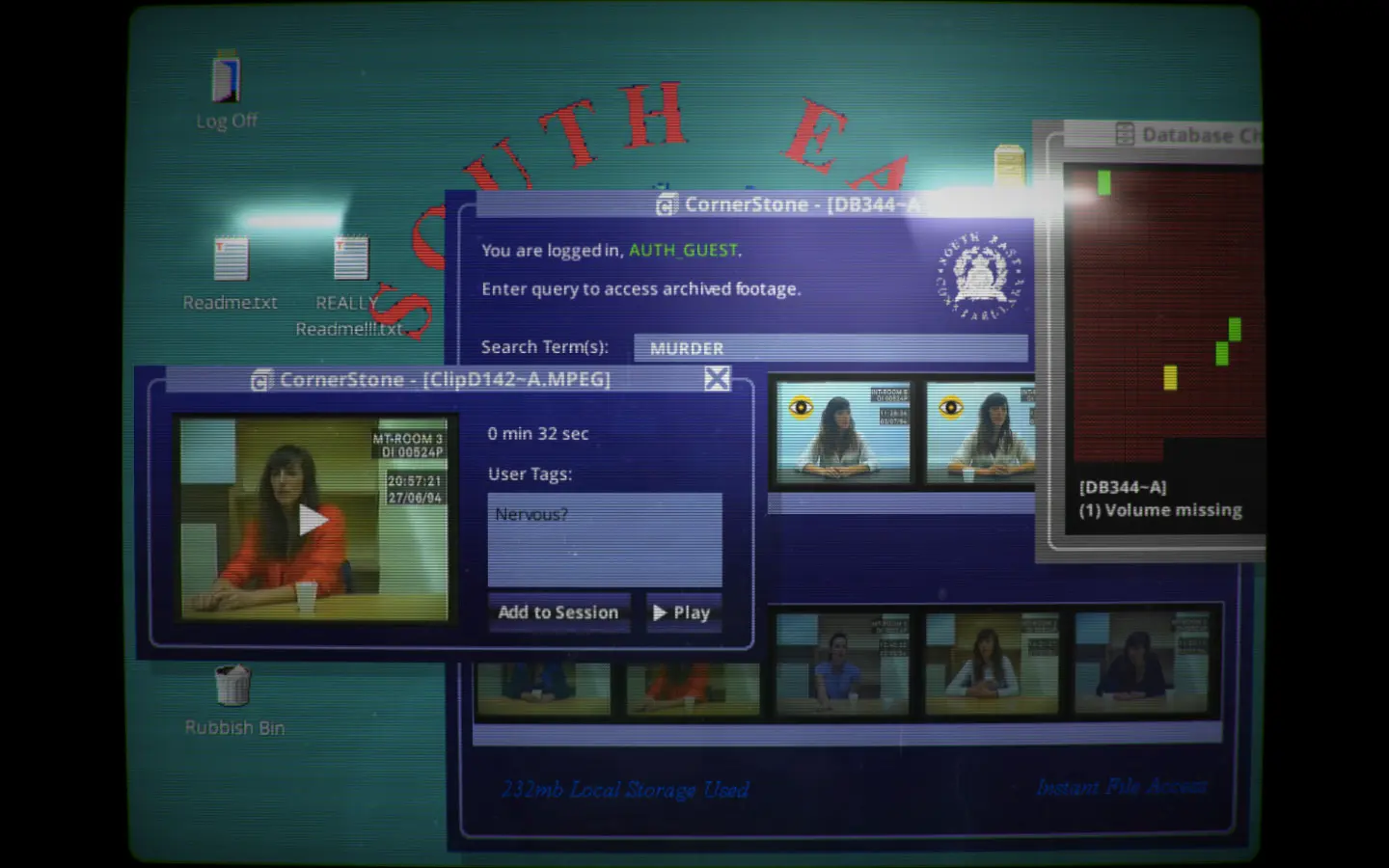
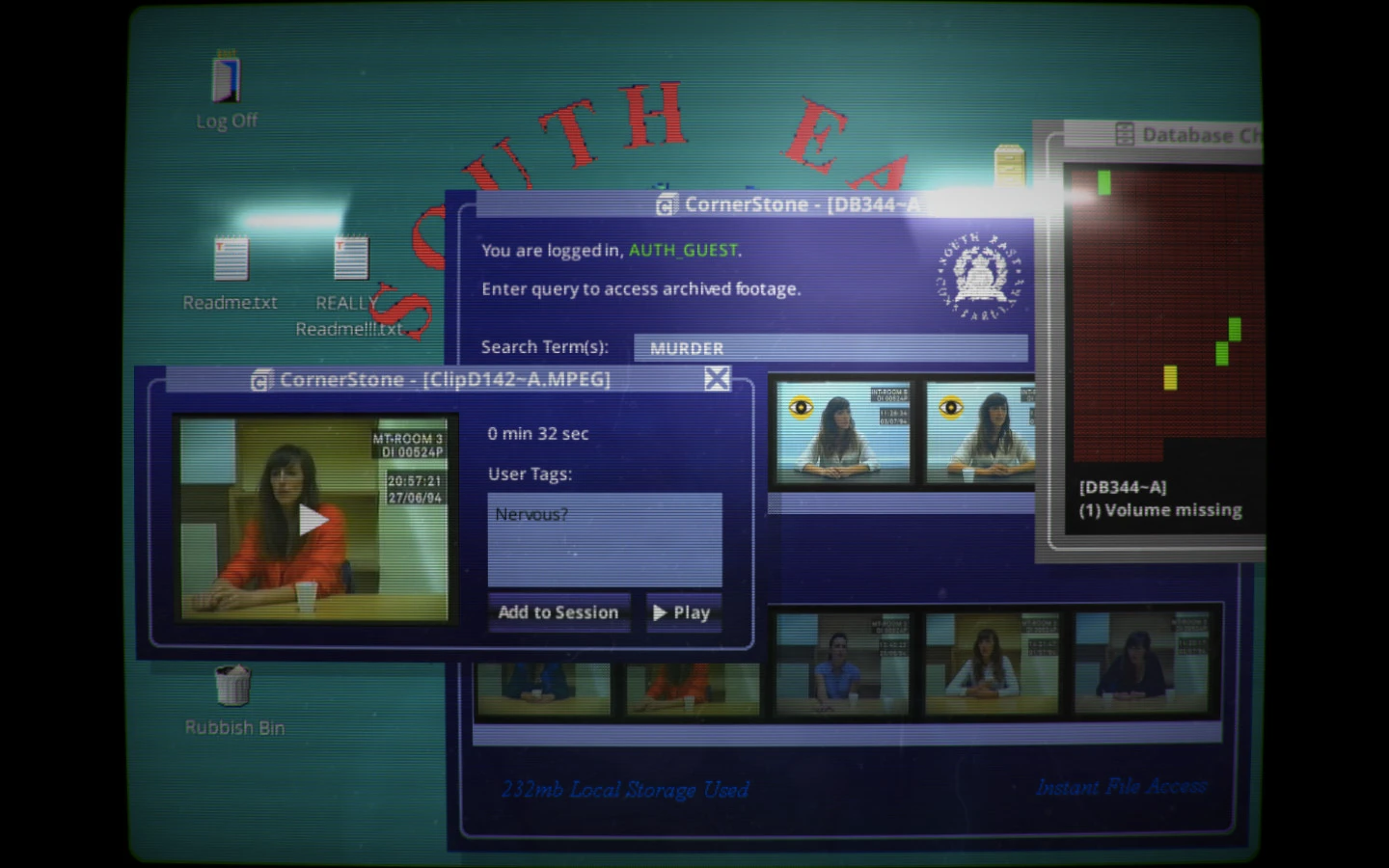
Her Story desktop: the purple L.O.G.I.C. Database fills the center, Search Term(s) with MURDER is near the top, result thumbnails are underneath, and an opened clip overlaps the left side.
Find the purple database window first. The Search Term(s) box is near its top; the little interview pictures below it are the results you can open.
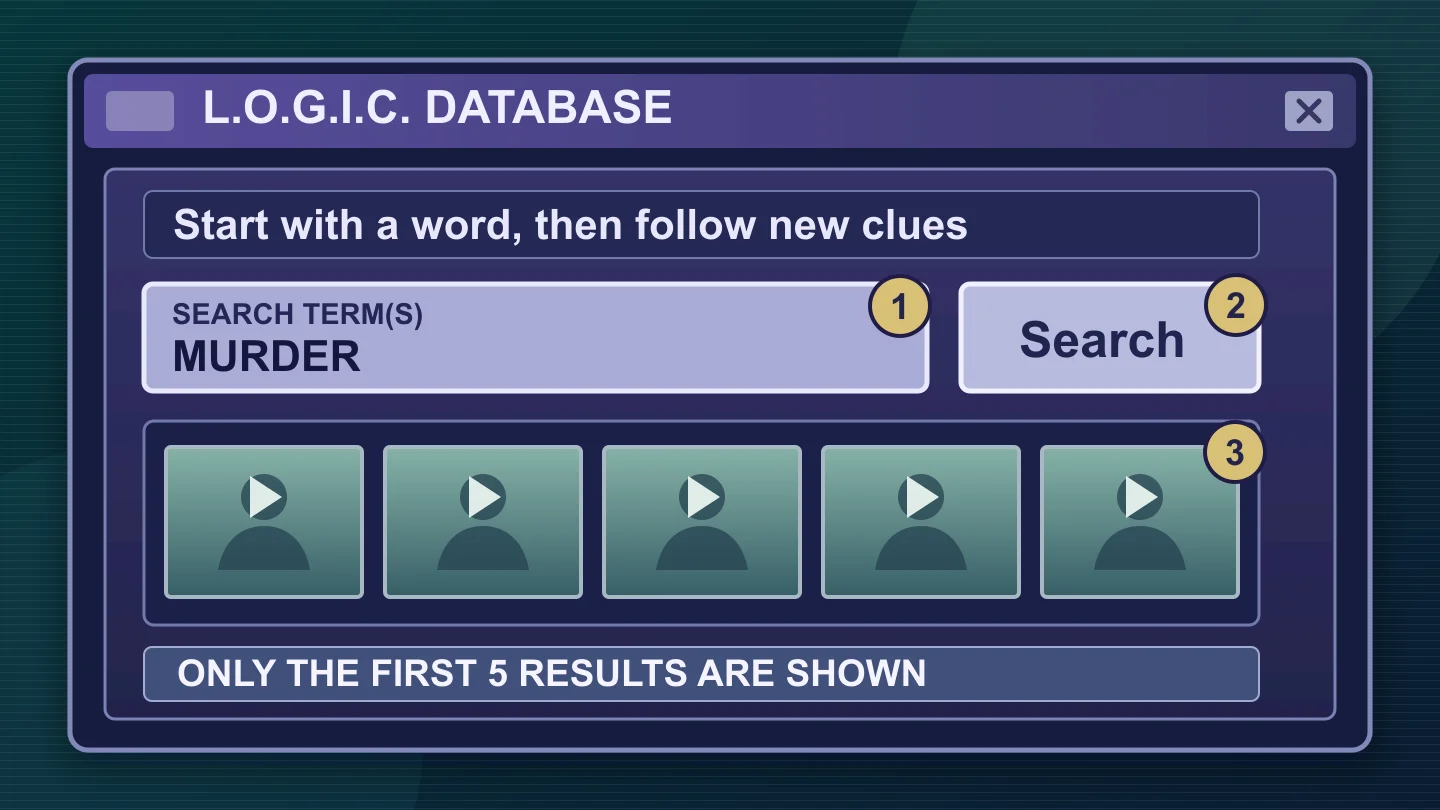
Pixel Twelve illustrated map of the Her Story database showing the Search Term(s) field, Search button, five video thumbnails and first-five-results warning.
Pixel Twelve interface diagram (not a screenshot): 1 enter a word in Search Term(s), 2 choose Search, 3 open a result thumbnail. A broad search shows only the first five matches.
  1. On the computer-style version shown here, find the large purple window in the middle of the desktop. Its title bar says CornerStone; the database sits inside it. If a smaller video window covers the search area, move or close that smaller window, not the whole database.
  2. Look for Search Term(s) near the top of that window. Click inside the pale horizontal field, type a single idea and click Search just to the right of the field. The screenshot shows MURDER only as an example of how a word appears in the field.
  3. Look directly below for a row of small interview images. Select one thumbnail, then use Play in the clip window to watch and listen. Your first search is the start of a trail, not a final answer.

Do not try to "solve" the opening screen. One result gives you a person, a date and a few words to follow. That is enough to make a useful second search.
Why a search may show only five videos

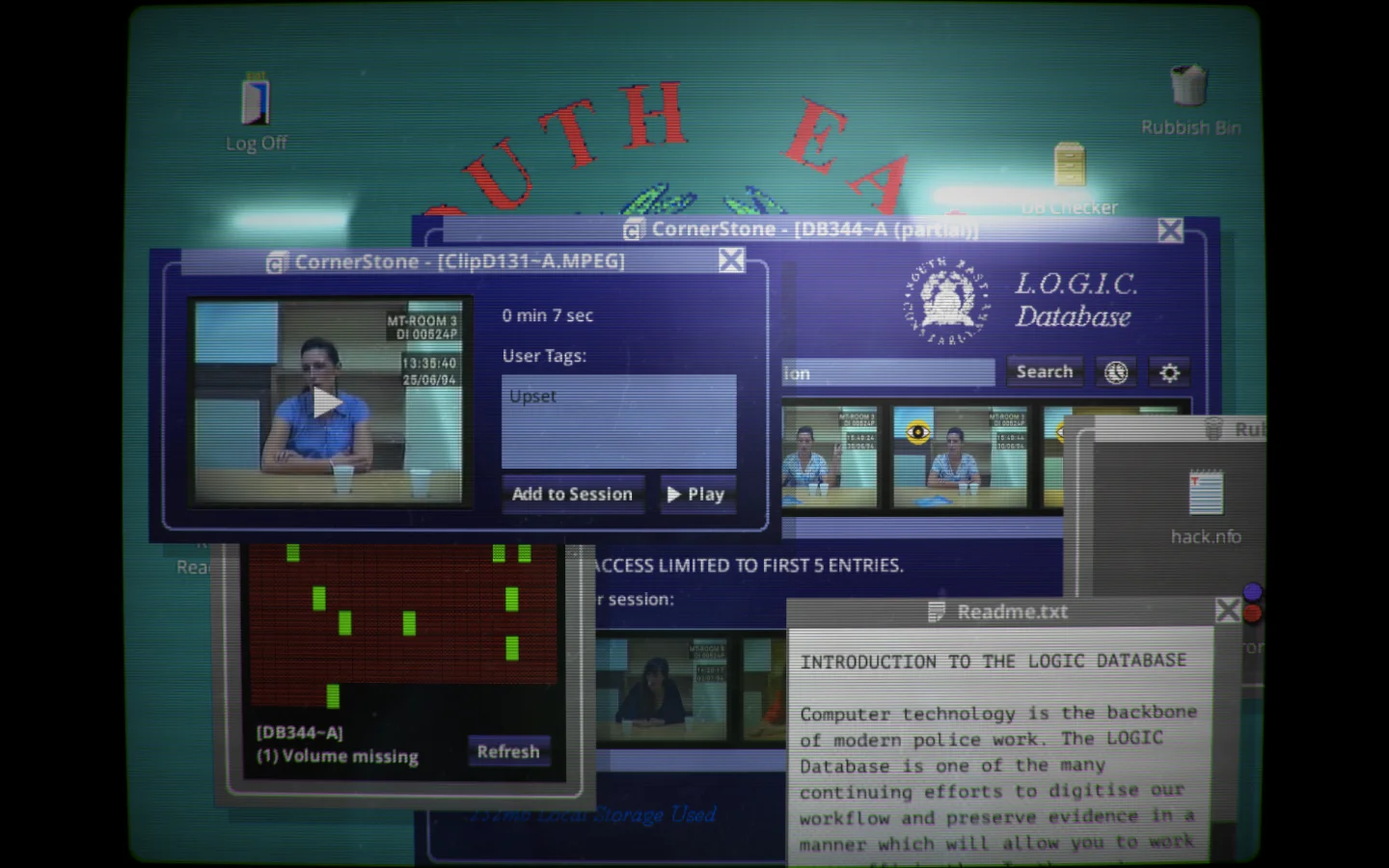
The database is not a complete list of all interviews. It searches for clips in which the woman speaks your word. A broad word can match many clips, but the screen warns that access is limited to the first five entries. That warning is visible in the next official screenshot. If you see five thumbnails, you have not necessarily found every clip that matches.

Her Story desktop with Search near the upper right of the purple database, video thumbnails underneath, an opened clip window at left, and ACCESS LIMITED TO FIRST 5 ENTRIES along the lower database area.
The warning says ACCESS LIMITED TO FIRST 5 ENTRIES. It means narrow the search when you need more than the first five matches.
  1. After a search, read the line near the lower part of the database window. If it says ACCESS LIMITED TO FIRST 5 ENTRIES, treat the visible five as a sample.
  2. Open one result and listen for a more specific word: a name, place, object or unusual phrase. The point is to search a detail the speaker actually says, not to guess a complicated code.
  3. Return to the Search Term(s) field and replace the broad word with that more specific one. Compare the new thumbnails with the ones you already watched.

If a new search gives no useful match, that is normal. Try another clearly spoken word from the clip. The official description says the database responds to words spoken in the videos, so a term taken from the conversation is a better lead than a theory you invented outside it. The five-result limit is the reason to branch to a narrower lead, not a sign that you have reached the end of the game.

Open a clip and read its date before drawing conclusions

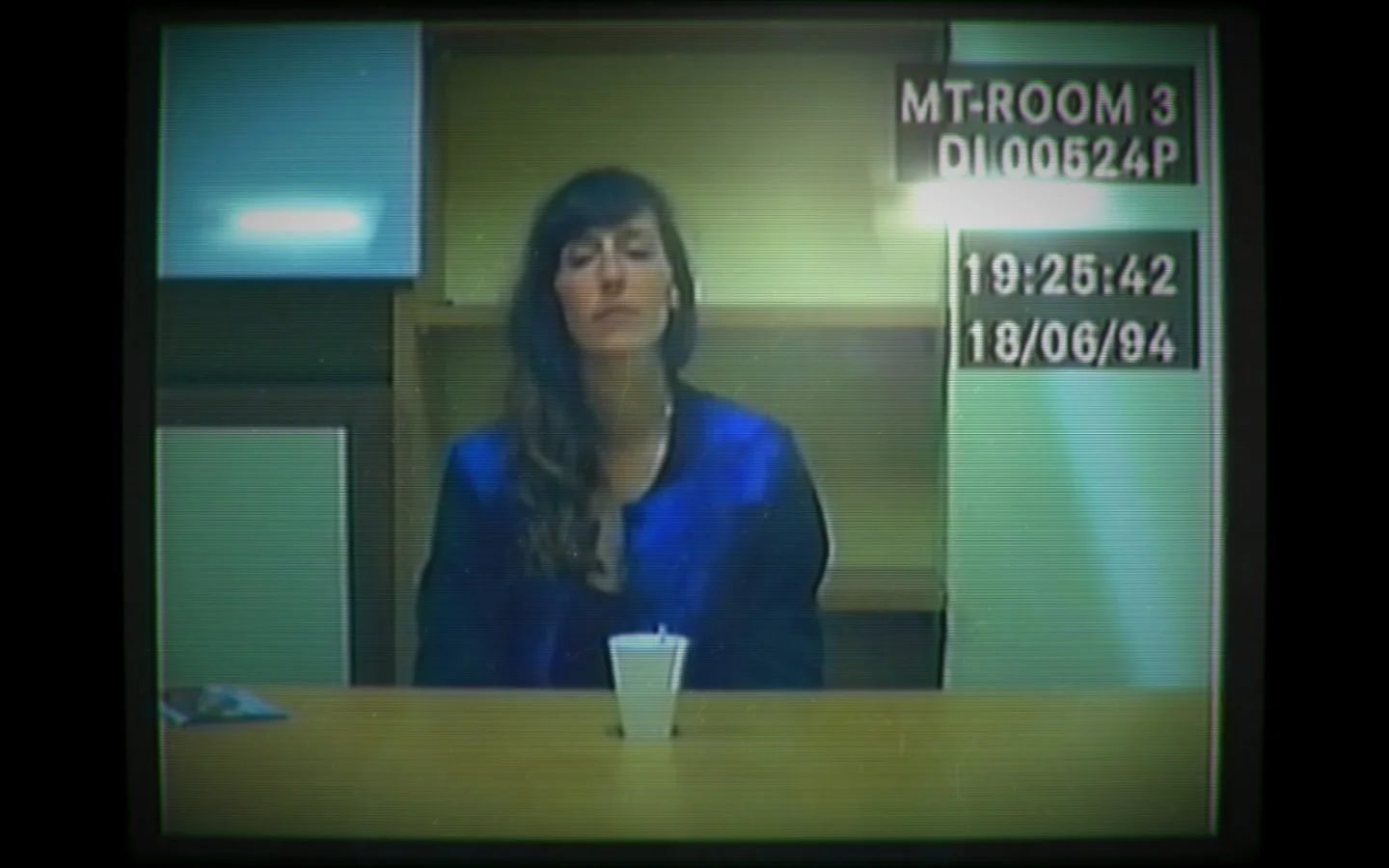
A clip is a short piece of an interview, not the whole conversation. Once you open a thumbnail, the video player shows the woman at a table. In the upper right of the footage there is a date and time. Those numbers belong to the recording, not to the moment when you found it. The order of your searches is not the order in which the interviews happened.

A woman wearing a blue jacket sits at a police interview table; the top-right corner of the footage includes a recording date and time.
Before writing down a clue, look at the recording stamp in the upper right of the clip.
  1. Watch the clip once without typing. Listen to what question seems to be answered and note one or two exact words you may want to search.
  2. Look to the top-right corner of the video for its date and time. Record that beside your note. If the small text is hard to read, open the image or clip larger rather than guessing at it.
  3. Replay if you missed a word. Then search the clearest new lead. You do not need to keep every detail from a clip in your head.

A useful note can be very small: recording date, a person or object mentioned, and one question you still have. For example, write "blue jacket clip — mentions a place — search place name next." That tells you what to do when you return after a break without giving away the story in advance.

Compare interviews without assuming a costume tells the whole story

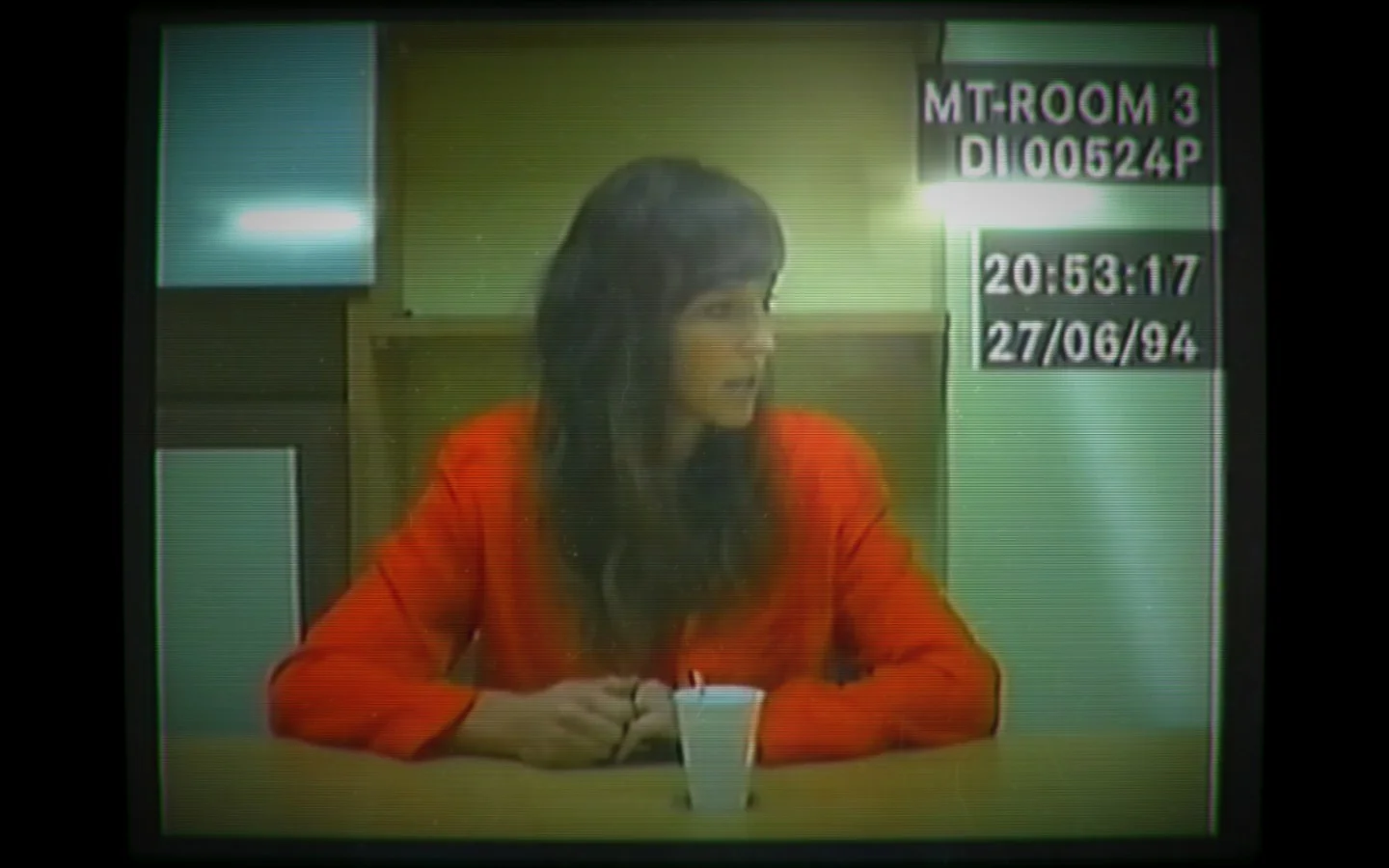
The official screenshots show the interview subject in different clothes. That can help you recognise that you have moved to another recorded session, but a change of outfit alone does not prove that two statements disagree or that one is more important. Check the date on the video, listen to the exact wording, then decide what deserves a follow-up search.

The Her Story interview subject wears a red blouse in a police-room recording, with a date and time stamp at top right.
Different clothes make a clip easier to recognise, but use the time stamp and spoken words to compare it with another interview.
  • When two clips seem connected, put their recording dates next to each other in your own notes.
  • Write down the two exact statements that caught your attention rather than a quick theory about what they must mean.
  • Search the shared person, place or object in those statements. A new clip may add context to both.

This simple comparison is more useful than trying to watch every search result in a single sitting. Her Story is designed so you assemble the account yourself. A timeline in a notebook is optional, but it makes the non-linear search less confusing. You can start one with only two dates and add to it as the archive gives you more.

Use the clip window as a small evidence desk

The smaller purple window in the desktop screenshots is the clip player. It has a text area marked User Tags and an Add to Session button. The tags are a place to label a clip in your own words; the session button is a way to gather a clip for review. These are helpers, not a test. You can ignore them for a few searches while you learn how the database works.

Her Story clip window in front of the database, with User Tags beside the video and Add to Session beneath that field.
On the clip window, User Tags is the pale box to the right of the video; Add to Session is the button directly below it.
  1. If a clip seems important, look beside the video in its own small window for User Tags. Type a short, clear label such as a person or subject you want to revisit. Do not write a full theory in a tiny tag field.
  2. Use Add to Session on that same window if you want the clip kept with the group you are reviewing. The button belongs to the clip you have open, not to every result in the database.
  3. Keep an outside note if that feels easier. The main thing is to leave yourself a path back to a clip: a date, a word you searched, or a tag you used.

You do not need to tag every video. Save the ones that create a new question or change how you read an earlier statement. That keeps your trail usable instead of turning it into another enormous list. If you are playing on a phone or tablet, the controls may be arranged differently from the desktop press screenshots; look for the same named functions in the interface you have.

What to do when a result looks like a dead end

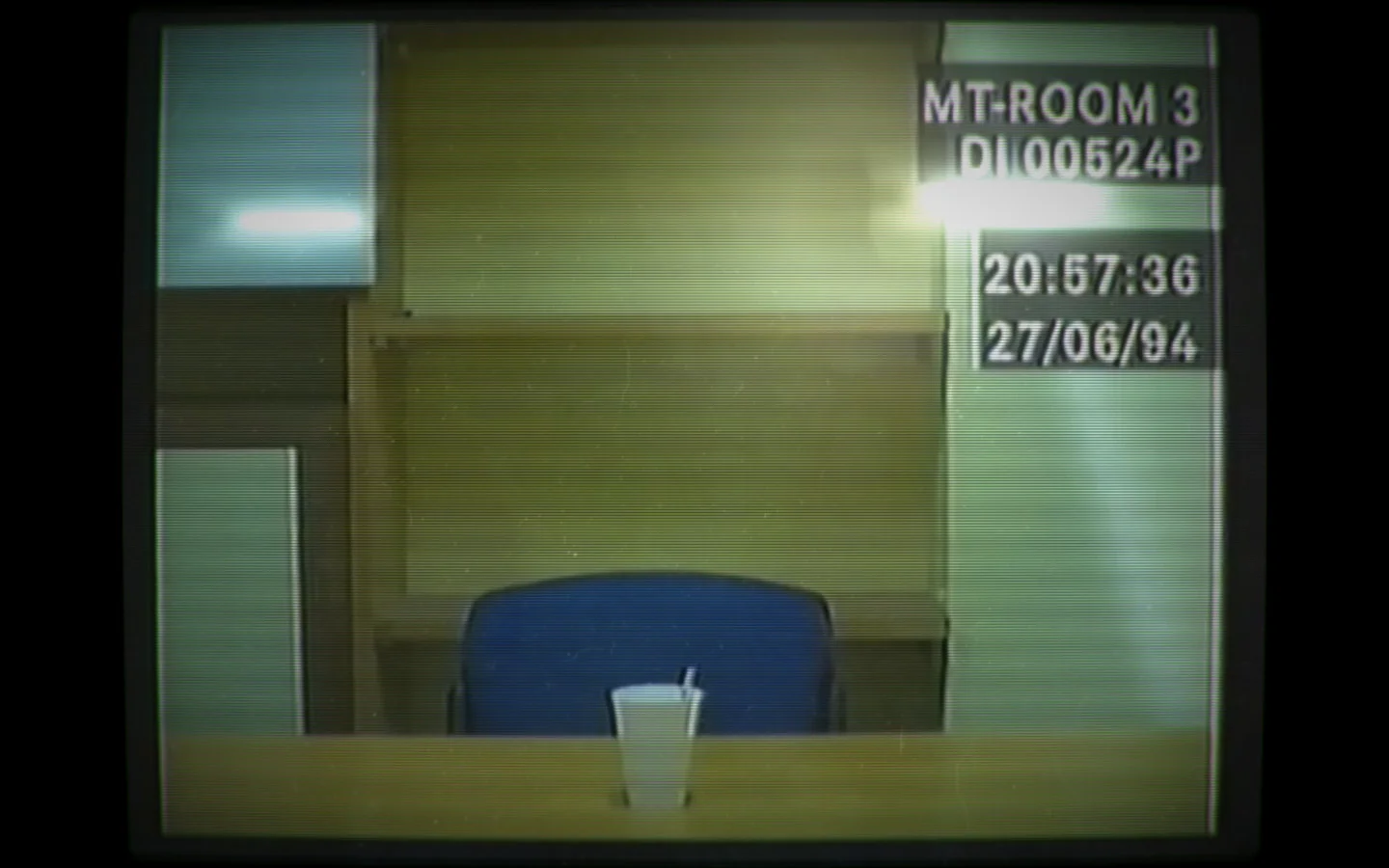
A search result is not guaranteed to be a dramatic revelation. Some clips are brief, and the still image may not tell you why it appeared. The official press set even includes an empty interview chair. That is a good reminder to watch a result and use its context rather than deciding from the thumbnail alone.

An empty police interview chair and a paper cup are visible in a dated Her Story recording.
A thumbnail can look unimportant. Play the clip and check its date or audio before deciding whether it adds context.
  • If you hear a new, specific word, search that word next.
  • If the result repeats something you already heard, compare its date with the earlier clip.
  • If it adds nothing, return to one of your unanswered questions and try a different lead.

Do not force every result into one theory. You are allowed to leave an uncertain clip aside and return later. Also avoid looking up a plot summary if you want to enjoy the mystery; the search process is the central activity of the game, not just a menu that stands between you and the answer.

A spoiler-light plan for your first fifteen minutes

  1. Find the purple L.O.G.I.C. Database window, then its Search Term(s) field near the top.
  2. Type a simple starting word and open one of the video thumbnails underneath.
  3. Press Play. Note the recording date and one word the woman actually says.
  4. Search that word. If you see the first-five-entries warning, choose a more specific word from one of the clips.
  5. After two or three clips, write a short note with a date and one unresolved question. Tag or add a clip to your session only if it helps you find it again.
  6. Repeat: search, watch, note, compare. Stop when you want a break; the story is not timed by your real-world clock.

If you can point to the search field, explain why five thumbnails may not be the full archive, and find a recording date, you already know the main interface. The rest is your own investigation.

Quick answers when the database feels confusing

  • Only five results appeared: that is the visible result limit for a broad search, not the size of the whole archive. Try a more specific spoken word.
  • A clip seems out of order: search order and recording order are different. Read the date and time printed in the footage.
  • You cannot find the search field: the clip player may be covering part of the main purple database window. Move or close only the smaller clip window.
  • You forgot which clip mattered: use its recording date, a short User Tag, Add to Session, or an outside note to build a trail back.
  • The screen looks different on mobile: the press images show a desktop layout. Find the search, playback and note functions by their labels rather than expecting the windows to be in exactly the same place.

The official Her Story site explains the premise, and the game page on Pixel Twelve has more screenshots if you want to see the different recording looks without reading a solution.

Get Pixel Twelve's biggest stories first.

Add as a preferred source on Google